

Cethana pumped hydro
Bree, Don & Gina
P: 0457 237 453
E: projectengagement@hydro.com.au


Project milestones
Project overview
There is a growing need for energy in storage to ‘fill in the gaps’. Pumped hydro – like Cethana – can store vast amounts of energy ready for when it’s needed. Storing energy will be the key to a secure, reliable energy system that powers Tasmania for generations to come. Plus, pumped hydro at Cethana will help Australia transition to renewable energy.
Here’s a quick look at what’s proposed at Cethana:
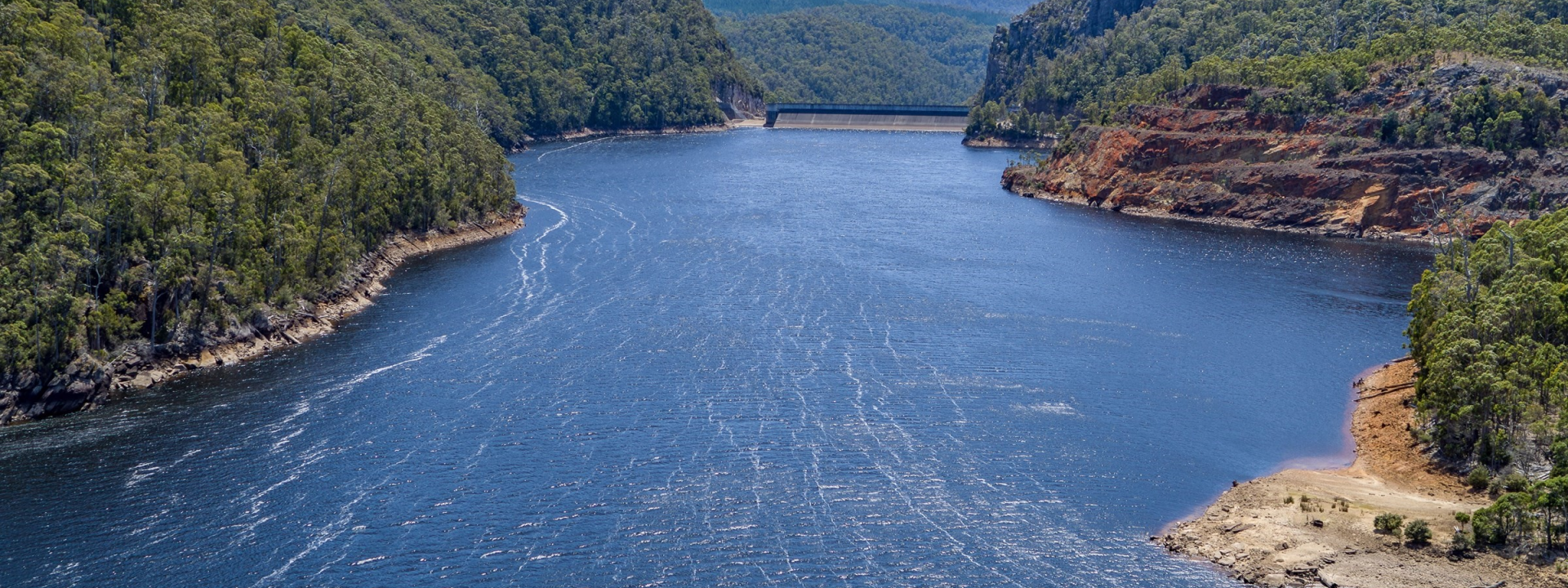
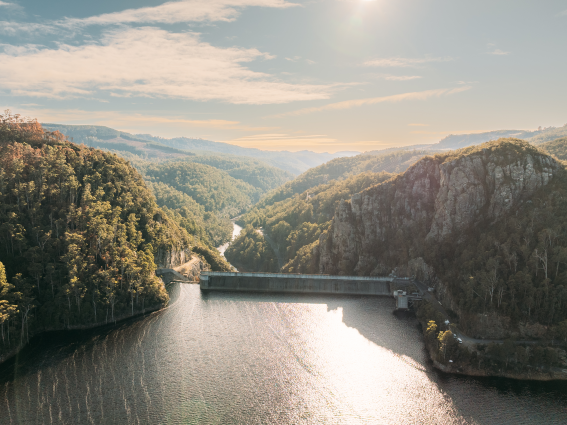
- Utilise the existing Lake Cethana as the lower storage.
- A new upper storage up the hill to the west of the existing lake.
- A power station deep underground between the two storages.
- A network of underground tunnels to link the storages together.
- A new transmission line to Staverton, primarily located within the existing corridor.
Cethana is a big storage project, with a generating capacity of 750 MW and a storage capacity of 20 hours. We expect construction phase would take about six to eight years and employ around 350 people (potentially up to 450 at peak construction).
That workforce will be housed in a new temporary workforce accommodation facility. You can read more about planning for the WAF here.
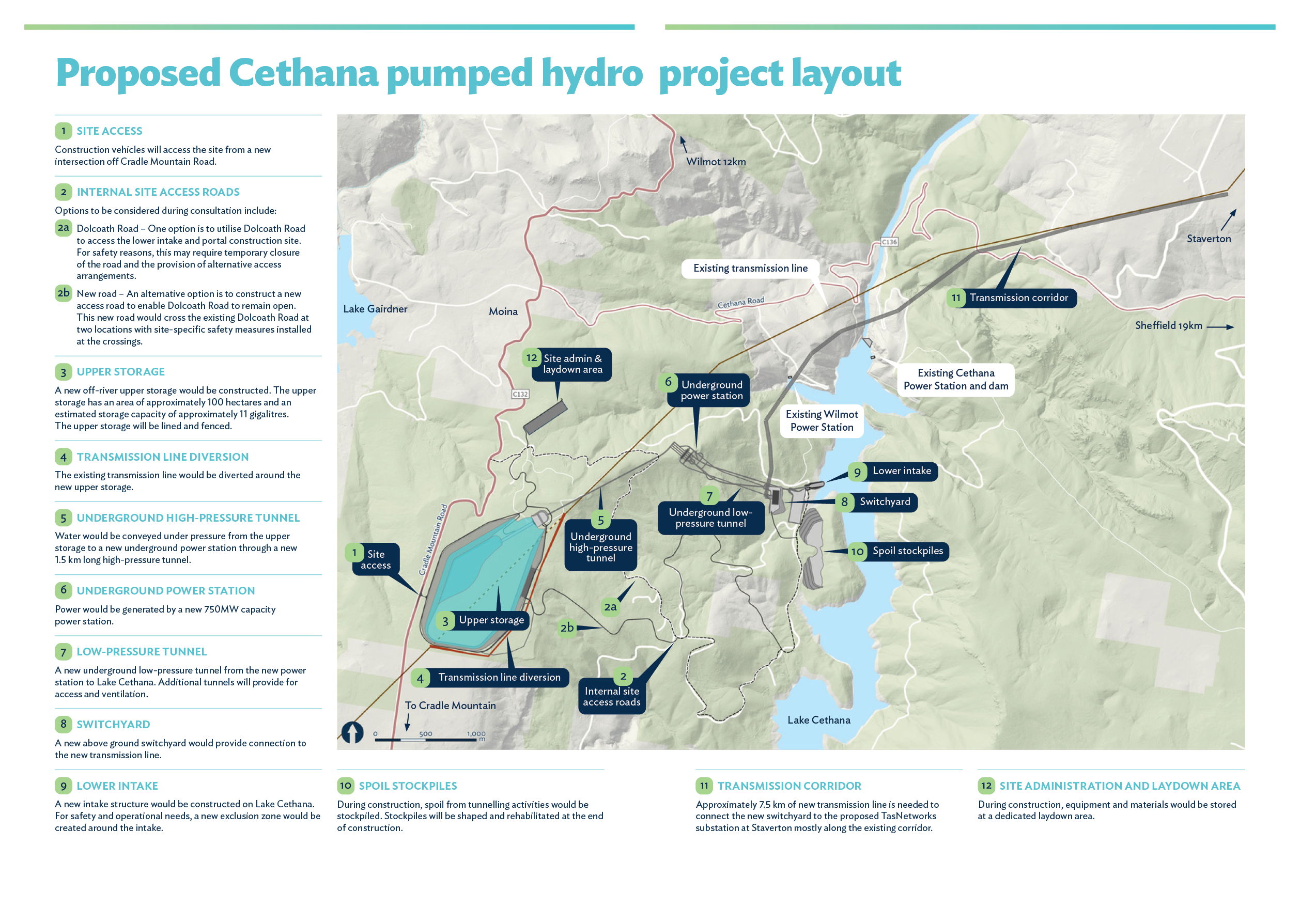
The map below shows the proposed project layout and where major infrastructure would be built. To make the diagram larger, just right click and select 'open in a new tab".
Project background
We gathered detailed information and assessed how suitable each site was based on technical, environmental, social and economic factors. Hearing from local communities was an important part of this process.
Cethana was selected as our preferred site. It has deep storage capacity, cost-effectiveness and higher technical certainty, and environmental and social sustainability.
If you’d like to know more about why pumped hydro will be important to our energy future, check out this short video.
I'm interested in
Future access to Lake Cethana
To ensure public safety during construction, public access to the western shore of Lake Cethana via Dolcoath Road would be restricted. Once construction is complete, access would be restored.
A new exclusion zone would be created on Lake Cethana around the site of the proposed new intake, when project construction kicks off. The exclusion zone will remain once the project is operational, to protect public safety.
While you will still be able to access Lake Cethana for recreational use, the rate of change in water levels will be greater due to the changing operations by introducing on-demand pumped hydro. The upper and lower limits of the lake’s operating range remain the same.
The Cethana project will not take water from the Mersey Forth scheme. The pumped hydro operation will have negligible impact on the storages downstream and the water available downstream for irrigation and other purposes.
For Lake Barrington, an important sport and recreational facility, it is not anticipated that the project will impact the operating range.
We are looking into the feasibility of using Dolcoath Road as the primary access for the construction phase. If we did this, we may need to close the road to public access for safety reasons.
We are also looking into alternative access options in consultation with directly affected landowners. One option is to construct a new access road on the project site, as shown on the project layout plan.
We will consult with affected landowners and the community about site access options.
We’re progressing our plans for housing a future workforce for the Cethana pumped hydro project. We’ve found a site in Middlesex for a temporary Workforce Accommodation Facility.
The site has advantages of being less than 10-minute drive to site, suitable size and flat terrain, potential to minimise visual impact and easy access off Cradle Mountain Road.
Find out more about what’s planned and how you can comment.
Around 7.5 km of new transmission infrastructure is needed to connect to the new TasNetworks sub-station at Staverton. This will follow existing transmission routes as far as possible and is likely to require some sections of new easement and the upgrading of some existing easements.
We have explored a number of potential alignments that minimise visual impacts and avoid threatened vegetation communities.
We will continue to work with landholders to minimise potential impacts of the transmission infrastructure.
We want local people and local businesses to be able to access project related opportunities, so we are developing a Local Content Plan for the project. We're continuing our conversations with local business operators, registered training organisations, education providers and labour hire companies about potential opportunities and ideas to enhance local participation.
We are committed to ensuring Tasmanian and First Nations participation. Utilising the Industry Capability Network (ICN) Tasmania is a central part of our approach to achieve this.
We strongly encourage businesses to register with the Industry Capability Network (ICN) Tasmania. - https://icn.org.au/icn-tas/ – to set up a business profile and be ready for future work package opportunities.
We want to ensure host communities and directly impacted communities share the benefits from the project. We are keen to hear ideas as we develop our Local Benefit Sharing Action Plan for the project. Please reach out to the team and keep an eye out for future opportunities to chat with us.
The Cethana project will require a range of approvals at Commonwealth, state and local government level.
We originally submitted our referral to the Commonwealth Government in mid-2023. This is a requirement under the EPBC Act (Environment Protection and Biodiversity Conservation Act 1999). The EPBC Act focuses on protecting matters of national environmental significance (called MNES).
Since then, we’ve undertaken extensive geotechnical and engineering work, and the potential project footprint has increased.
We consulted with DCCEEW (the regulatory body that manages EPBC referrals) on the changes since the original referral. They recommended withdrawing and submitting a new referral.
Our updated EPBC referral looks at the matters of national environmental significance – what we found in our studies and how we plan to lessen or avoid any impacts. The new referral was submitted in December 2025 and it was open for public comment during January 2026. DCCEEW will consider our submission along with any public comment and let us know the next steps.
We’ll keep you updated as we move through the process.
Workforce accommodation
To support the future workforce, we’ve found a site for a temporary Workforce Accommodation Facility in Middlesex, in close proximity to the Cethana project site. A dedicated, temporary facility is the best way to house workers without adding pressure to the local rental or visitor accommodation markets.
We’re committed to planning the facility carefully so that any impacts on the community are minimised. To help guide our planning, we’re carrying out a range of technical assessments to better understand and manage potential impacts.
Business opportunities
We know that our projects can provide opportunities for suitably qualified and experienced suppliers, contractors, subcontractors, consultants and other service providers. This may either be directly or indirectly.
We are committed to ensuring Tasmanian and First Nations participation. Utilising the Industry Capability Network (ICN) Tasmania is a central part of our approach to achieve this.
We’ll also have targets for local content, participation and skills and training development when we get to the construction contract stage.
At this early stage in the procurement process, we are encouraging businesses to register with the Industry Capability Network (ICN) Tasmania and set up a company profile, to be ready for future opportunities on our major projects
Head here to register. The basic package is free.
Ask a question
See answered questions