


How does the electricity network function?
In the NEM, generators produce electricity from renewable energy (hydropower, wind, solar) and non-renewable energy (coal and gas).
The electricity moves from the generators to homes and businesses along the transmission and distribution networks (poles and wires).
Retailers buy electricity from generators and sell it to their customers.
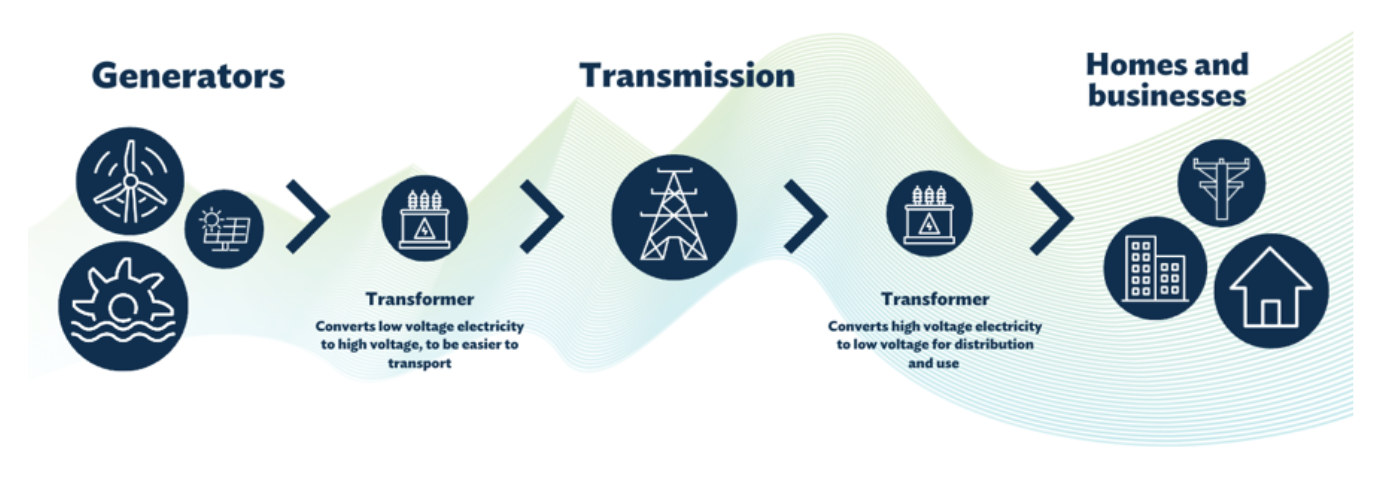
Australia’s NEM is one of the largest interconnected power systems in the world, where the generators, transmission and distribution operators, and retailers all work together to meet the electricity needs of over 10.7 million customers. The Australian Energy Market Operator (AEMO) oversees everything.
Interconnectors transfer energy between states
Interconnectors allow us to buy and sell energy – and to make sure that Tasmania always has enough electricity, just in case there's ever a time when there isn’t enough water, wind or sun to meet our needs.
With the interconnectors, we can get the most value out of our water.
Our electricity is good for Tasmania and good for the country too. When the price is right and we’ve got more energy than we need, we sell some of our electricity to mainland Australia. Most of the money we earn for this goes back into keeping our power stations in good condition, or it goes to the Tasmanian Government to pay for services (like health and education) that Tasmanians need.
When we sell renewable energy into the mainland states via the NEM, we’re also helping address climate change – because less coal and gas needs to be used across Australia.
Selling renewable energy via the NEM when the price is right means Tasmania can get better economic returns and lower power prices – and we can keep creating jobs and investing in our future.
How do we keep energy secure?
We carefully manage our water storages so that Tasmanian homes and businesses have secure and reliable electricity.
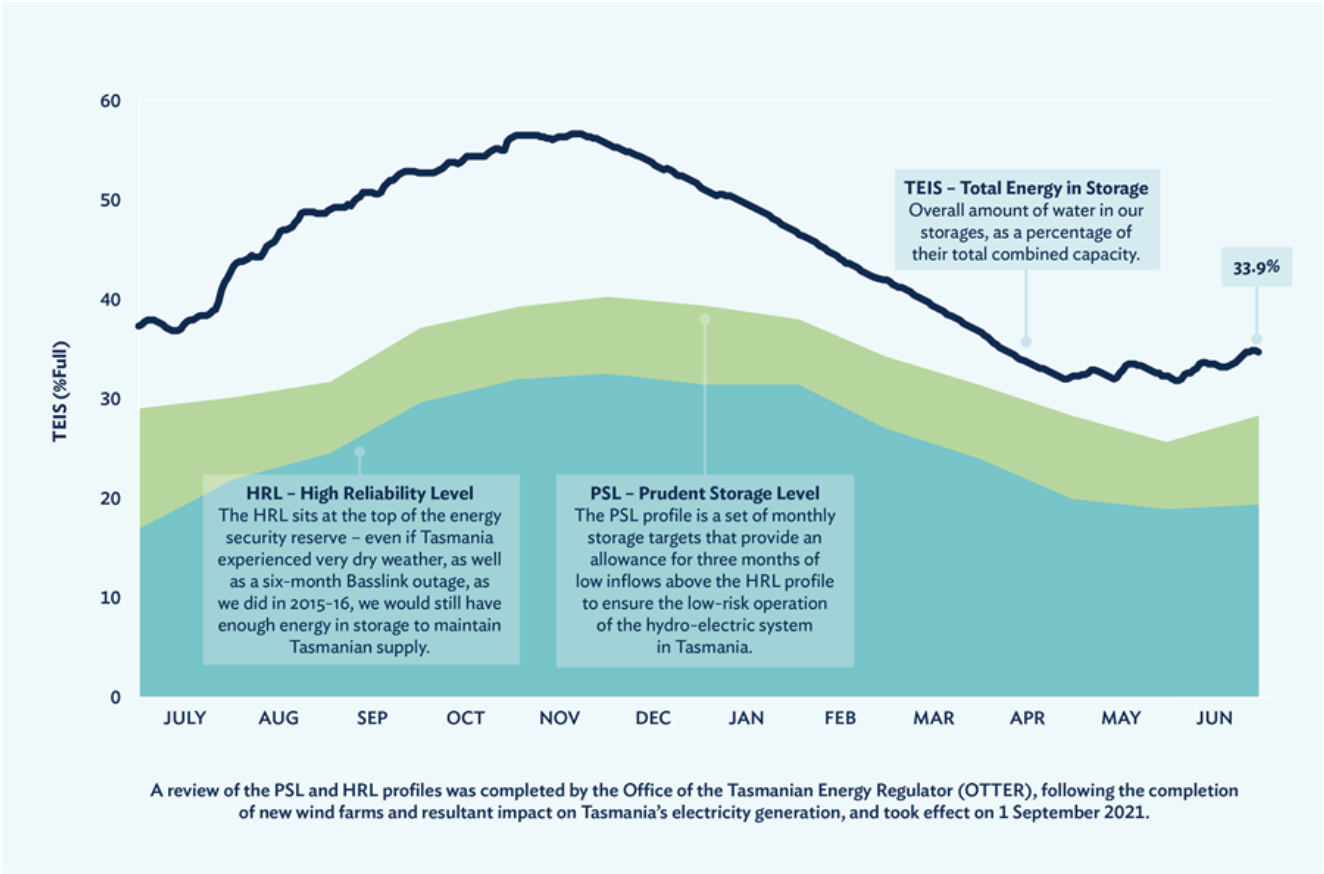
The Total Energy in Storage (TEIS) figure is the percentage of water we currently have in all of our storages. It hardly ever goes above 50 per cent or below about 25 per cent.
We use Tasmania’s ‘Energy Security Framework’ to monitor energy security. We set a High Reliability Level (HRL) and a Prudent Storage Level (PSL).
The HRL is a level that would allow us to maintain Tasmanian supply even if the weather was very dry and we had a 6-month Basslink outage.
The PSL is an early indicator that we need to adjust our operations to maintain water storages. It is normal for storages to move above and below the PSL, so not a cause for alarm.
We also have wind farms and a gas-fired power station that can help us keep energy secure and reliable.