


Improvements
- electrifying more of our vehicle fleet
- adding solar to the hybrid energy system on King Island
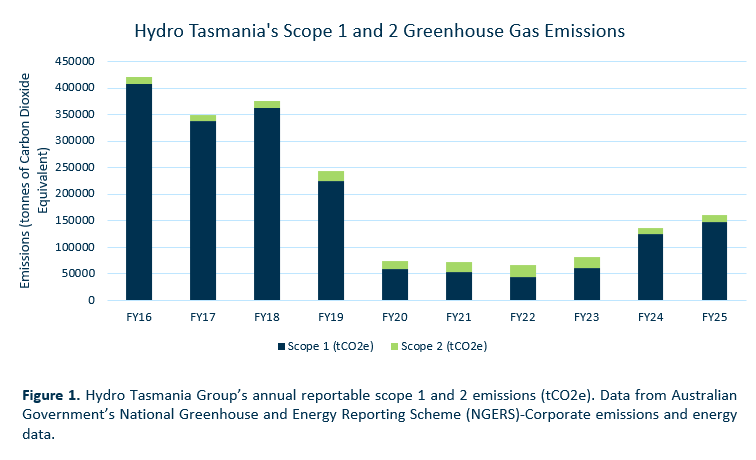
- using Australian Carbon Credit Units to offset our reportable scope 1 emissions
- matching our electricity consumption (scope 2 emissions) with International Renewable Energy Certificates produced from Tasmanian hydropower
- continuing to quantify our scope 3 emissions, which will be independently audited
- partnering with ‘Goodbye Gas’ to support Momentum Energy customers to electrify their homes and reduce their carbon footprint
Our Toward Net Zero Action Plan recognises some key challenges we face including emissions from the Tamar Valley Power Station (which is only turned on when necessary to support storages or manage energy supply) and the lack of agreed quantification methodology for scope 1 emissions from the lakes and reservoirs we manage.
We’ll continue to review our approach to managing our climate impact based on emerging global research, evolving perspectives and shareholder expectations.
Toward Net Zero actions and progress
✓ First electric vehicles purchased
✓ King Island solar farm commissioned
✓ Begin process to quantify scope 3 emissions
✓ Ongoing research program to measure emissions from specific lakes
✓ Offset strategy developed
✓ Momentum Energy customer insights and tools
✓ Energy efficiency initiatives in buildings and facilities
✓ Offset tender finalised
✓ New energy efficiency products and services for Momentum Energy customers
✓ Field work conducted as part of reservoir emissions research and participation in global research on methane emissions with ‘Bluemethane’
✓ Commenced King Island infrastructure refresh including refurbishing wind turbines and upgrading battery
✓ More electric vehicles and charging stations
✓ ‘Goodbye Gas’ electrification and gas transition plan developed for Momentum Energy customers
✓ Implemented a program to purchase Australian Carbon Credit Units as a means of offsetting our reportable scope 1 emissions on a monthly basis from 1 June 2025. This program doesn't cover emissions from the lakes and reservoirs we manage (which we are working to quantify and which may become reportable in future) or future emissions from the combined-cycle gas turbine at the Tamar Valley Power Station (which would be operated, for example, if hydro resources are limited or the Basslink interconnector is offline)
✓ Matching from 1 June 2025 our electricity consumption (scope 2 emissions) with International Renewable Energy Certificates produced from Tasmanian hydropower generation
✓ Joined the International Hydropower Association Reservoir Emissions Working Group
✓ Submitted for publication a scientific research paper on bubbling releases of methane from Australian reservoirs
- Quantify Scope 3 emissions and develop and implement an associated emissions reduction plan
- Working towards the goal for all Hydro Tasmania passenger vehicles to be electric by 2030
- Momentum Energy continues electrification journey for customers
- Entura continues to partner with its clients to drive reductions in greenhouse gas emissions
Understanding climate impacts and building resilience
Understanding the impacts of climate change can guide our efforts to increase the resilience of the natural and built assets we manage.
For more than a decade, we have partnered with leading research organisations such as CSIRO, the Antarctic and Climate Ecosystems CRC and our consulting business, Entura, to model future hydrological conditions in our catchments. These studies inform our planning for electricity generation and for keeping our dams and downstream communities safe.
We’ve also formalised a collaboration with the University of Tasmania, strengthening our capacity in climate science, asset resilience and community engagement.
In preparation for each bushfire season, we work closely with the Tasmania Fire Service, Tasmanian Parks and Wildlife, and TasNetworks on water storage strategies and managing vegetation and fire trails to protect critical infrastructure like power stations, pump stations, pipelines and penstocks. Each power station has its own unique fire management plan, aligned with best-practice standards and legislation.
Tasmanians can be confident that we’re always engaging with up-to-date science, monitoring conditions, planning for change, and taking action to keep the lights on and communities safe.