Edgar Dam

Senior Community Engagement Advisor
Hydro Tasmania
Email: jane.alpine@hydro.com.au

Project updates
Key dates
Project background
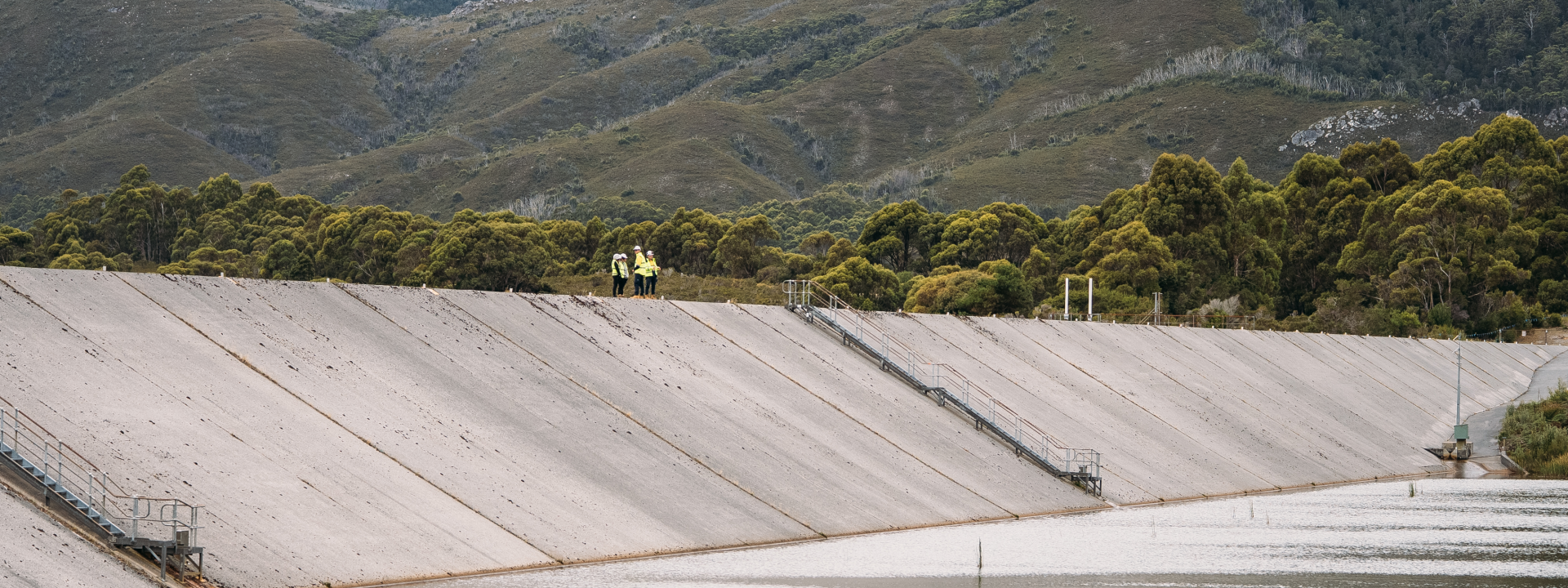
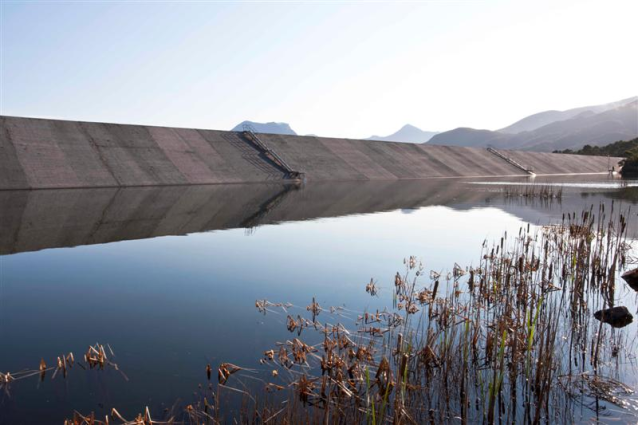
Built in 1972, it is part of the mighty Gordon-Pedder scheme, capturing 40% of the water that supplies Tasmania's largest hydropower station, Gordon Power Station. This station can generate up to 432 MW of electricity or approximately 13% of Tasmania's annual energy needs.

Edgar Dam lies next to Lake Edgar fault (see map below from McCue et al., 2003), a crack in the earth's crust that was formed about 540 million years ago. When the dam was built, engineers knew about the fault but in the Australian context, earthquakes were poorly understood and the fault was deemed inactive. Several high-profile earthquakes, including the devastating 1989 event in Newcastle, changed perceptions around the risk of earthquakes and prompted new research at fault sites across Australia, allowing scientists to develop a much more detailed understanding of past and possible future behaviour.

From this new research, Lake Edgar fault was deemed active, although the chance of movement is extremely low. Scientists now believe the fault has had 3 significant movements in the past 48–61,000 years, triggered by earthquakes of a magnitude 6 and above. The last significant movement was thought to be 18,000 years ago (Swindon et al., 2007; Clark et al., 2011).
Many dams are built and perform safely in active earthquake areas. The key is to appropriately manage seismic risk. What the research highlighted was a new risk that needed additional management - until now, we've managed this risk using post-event controls (safety planning, in-situ monitoring) and this work will permanently improve the dam's seismic resistance. Learn more about managing dam risks in this section.
Project overview
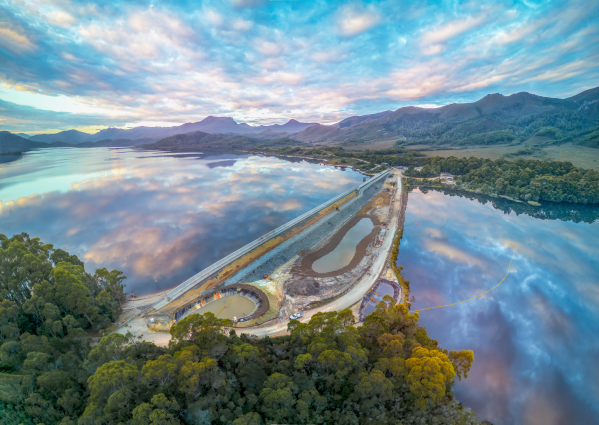
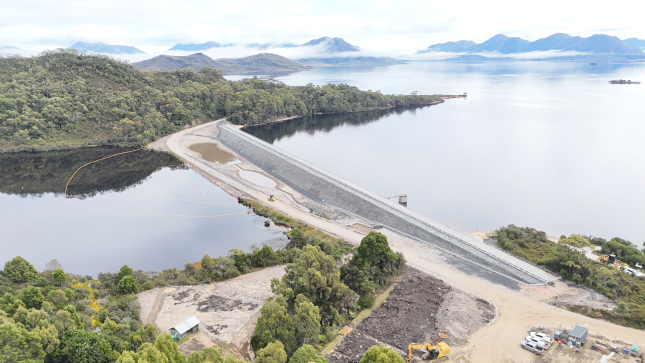
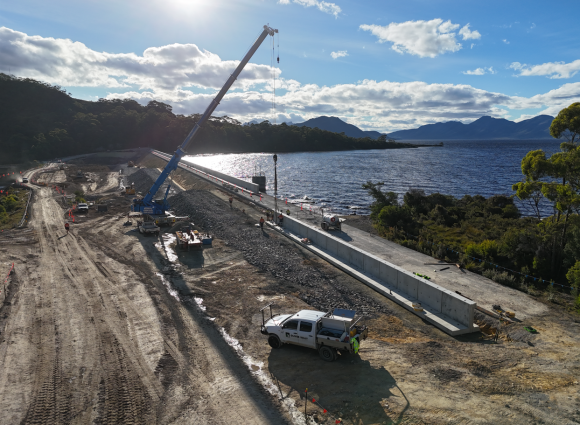
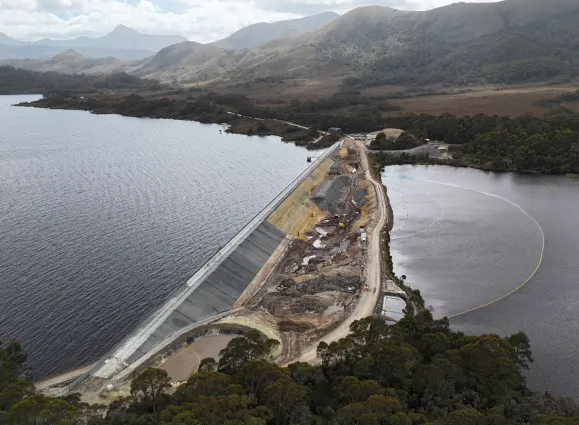
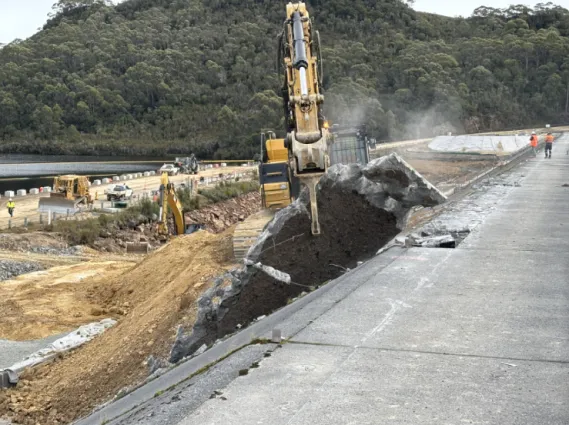
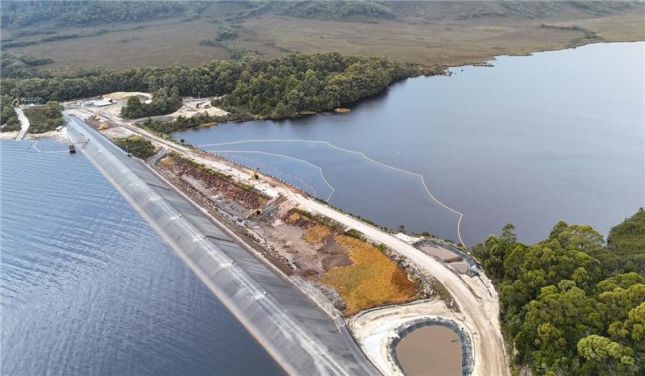
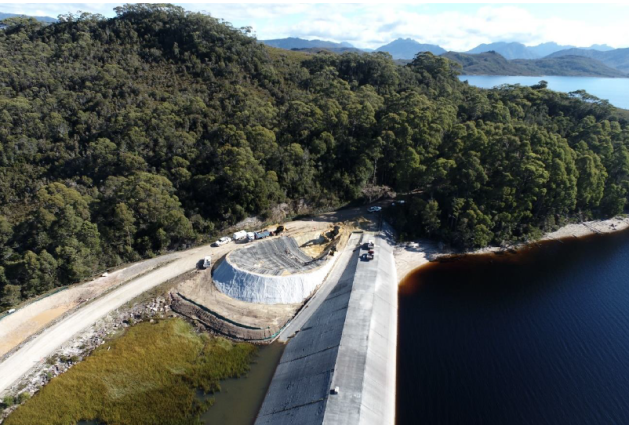
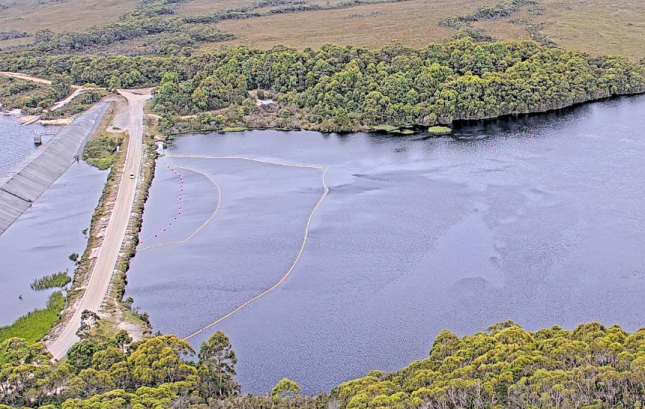
Before construction, the toe pond (at the base of the dam wall) will be excavated down to the rock to ensure the new structures are built on a solid foundation which will improve stability and drainage. These features will improve the dam wall's capacity to withstand an earthquake. A wave barrier will be added along the top of the dam wall to deflect seiche waves which can form after an earthquake.
This simple, low-impact engineering solution will deliver immediate safety benefits for the community and environment and ensure we are meeting our responsibilities as owners and managers of this asset.
As we progress through to the approvals and construction phases, we'll publish regular updates on this page. Be sure to regularly check back in to stay up-to-date!
Ask a question
See answered questions
I'm interested in
Given Edgar Dam's remote location, we don't expect construction issues like loud noises, dust or vibrations to be a significant concern. There will be increased truck traffic through communities on Gordon River Road, including Maydena, Glenora and Westerway. We will be talking to communities about this temporary impact.
If you're travelling to Edgar or Scotts Peak Dams, you will likely see more trucks and may have to briefly stop at traffic control points as construction vehicles and staff move about.
During works, Edgar Dam campground will used as a staff camp and closed to the public. While we realise this might impact your travel plans, it helps us reduce the risk of roadkill and keep our staff safer. Once the project has finished, we'll be looking to make some campground improvements - if you've got an idea, get in touch!
Don't let that put you off visiting - the nearby Teds Beach and Huon campgrounds offer great camping - visit https://parks.tas.gov.au/explore-our-parks/southwest-national-park/southwest-camping(External link) to learn more.
Works will be undertaken in a particular manner that has been determined to avoid significant impacts. For more information please refer to the EPBC decision notice.
If you're travelling to Edgar or Scotts Peak dams, you will likely see more trucks and may have to briefly stop at traffic control points as construction vehicles and staff move about.
During works, Edgar Dam campground will used as a staff camp and closed to the public. The boat ramp will also be closed for safety reasons. While we realise this might impact your travel plans, it helps us reduce the risk of roadkill and keep our staff safer. Once the project has finished, we'll be looking to make some campground improvements. If you've got an idea, be sure to let us know.
Don't let that put you off visiting - the nearby Teds Beach and Huon campgrounds offer great camping - visit https://parks.tas.gov.au/explore-our-parks/southwest-national-park/southwest-camping(External link) to learn more.
There are some great businesses operating in this spectacular corner of Tasmania including Tassie Bound who offer guided kayaking tours and hiking trips with Life's an Adventure.
Operators and customers may see more truck traffic as they travel around this area or have to briefly stop at traffic control points as construction vehicles and staff move about.
Edgar Dam campground and boat ramp will be closed during works but nearby Teds Beach and Huon campgrounds offer great camping alternatives - visit https://parks.tas.gov.au/explore-our-parks/southwest-national-park/southwest-camping to learn more.
The project budget is $35 million.
We have a number of actions in place to manage biosecurity at the Edgar Dam work site.
- To minimise introduction or spread of weeds and pests, all project vehicles are being washed down coming into and out of the work site. Two comprehensive, automated wash down facilities along Scotts Peak Road are currently under construction. They will help us manage the increased volume of trucks bringing building materials into the site. While these facilities are under construction (and project vehicle movements remain relatively low) we're using a combination of fixed and mobile washing and disinfection equipment.
- We’re making sure all imported dam upgrade materials (rock, gravel, sand) have to come from quarries that have established weed and disease control measures.
- All waste materials (including all site office and accommodation waste water) will be taken off site for disposal at approved facilities.
We take the potential risks to the natural values of the Tasmanian Wilderness World Heritage Area (TWWHA) that surrounds the Edgar Dam work site seriously and together these measures are designed to protect these values.
Risk is part of every day life. The morning commute, the mid-afternoon chocolate bar and the after work football game can all increase your risk of injury or even death, but we rarely give this much thought. That's probably a good thing because humans are notoriously bad at accurately quantifying risk - hands up everyone who worries about sharks when swimming but never thinks about falling coconuts which are statistically more likely to kill you.
In the world of large infrastructure, entire teams spend every day thinking about risk. In this context, understanding risk informs how bridges, roads, power stations and dams should be constructed, used and safely maintained. In this context, risk assessments rely on data from real and modelled events, that tell us how likely events are to occur and what will happen if they do, combined with expert judgement. Bridge limits, the location of road barriers and choice of building material are just a few of the decisions that are informed by risk assessments. With any risk, the goal is to always to remove or reduce it as much as possible.
At Hydro Tasmania, we have a dam safety team who continuously monitor dam risks and recommend actions to remove or reduce them. Risks rarely stay constant so the team often re-prioritise these actions to make sure we're always working on the most important things first. The dam safety team draw on data and knowledge from around the world - and with approximately 60,000 large dams in operation, that's a lot of experience. Every action we undertake is designed to keep you safer and our goal is to make sure our dams don't increase your day-to-day risk.