


Trash (rack) or treasure at Trevallyn
About 18 metres underwater, right at the edge of Lake Trevallyn, sits an unglamorous but important piece of hydropower infrastructure: the trash rack. The screen sits over the power station intake and acts like a giant sieve, stopping logs, rocks and branches from being pulled into the power station.
Parts of the Trevallyn trash rack dated back to the 1960s, so the time had come for replacement.
Hydro Tasmania Project Manager Andrew Rumsby explained that a job like this would be far easier in the dry, but draining Lake Trevallyn wasn’t a realistic option. The lake is a shared resource, used by TasWater for Launceston’s drinking water, by local farmers for irrigation, and by recreational users. Draining the lake would mean significant impacts on stakeholders, extra costs for Hydro Tasmania, and a rather unpleasant muddy environment for nearby residents.
Replacing a trash rack without draining a lake isn’t unheard of, but this project presented something of a new challenge because the original steel support beams had been cast directly into the concrete intake structure.
“They can’t be unbolted,” explained mechanical design engineer Eli Pharaoh from our consulting arm, Entura. “They’re literally part of the concrete, so you’d have to cut them out underwater and then somehow install something new in their place.”
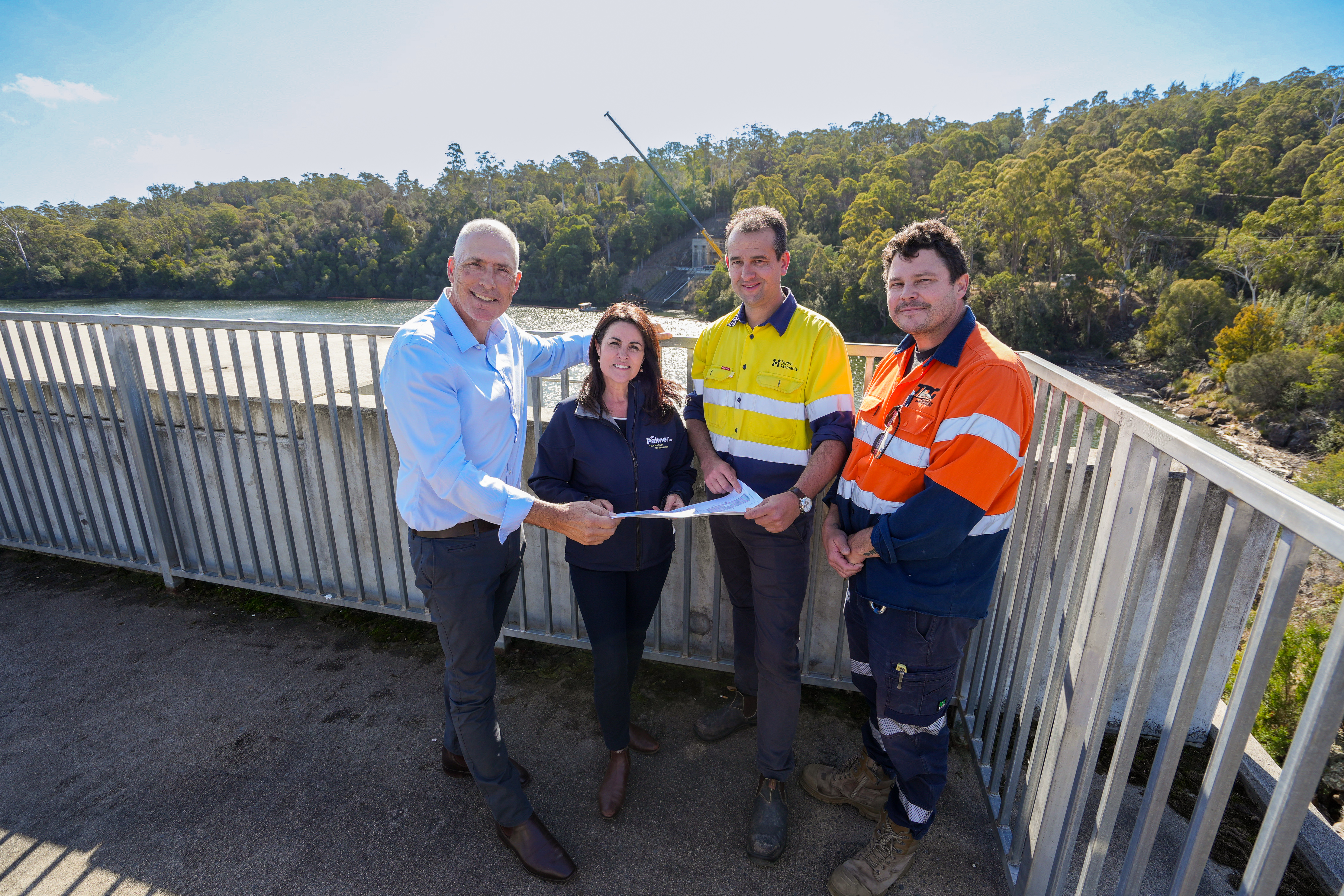
(Pictured in front of the newly installed trash rack: Minister for Energy and Renewables Nick Duigan, Jo Palmer MLC, Jesse Clark Executive General Manager Assets and Infrastructure at Hydro Tasmania and Lachlan Osborne, Tasmanian Divers Group)
The ‘big frame’ idea
The solution was a design approach that had been floating around at Entura for many years but not yet applied, known as the ‘big frame’ idea.
Rather than replacing the beams and panels one by one, the new design uses a 14 m by 12 m prefabricated steel frame that fits around the intake opening. This frame provides precise mounting points for the new beams and the 8 screen panels, regardless of how uneven or imperfect the original concrete might be.
“As long as the frame goes in square, everything else lines up,” said Eli.
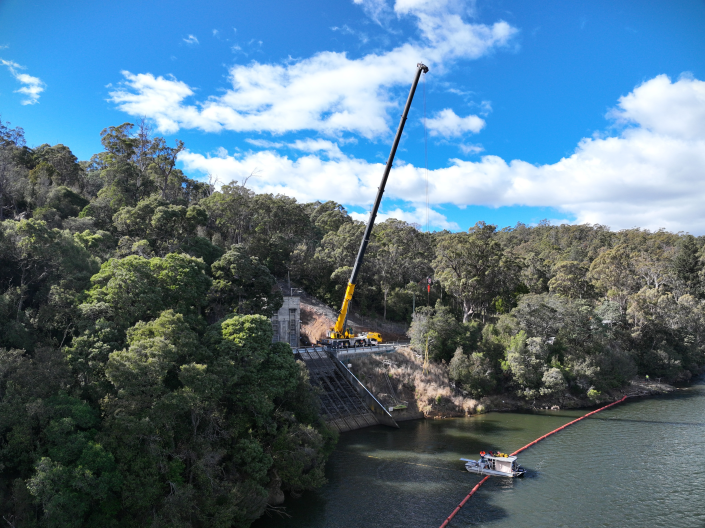
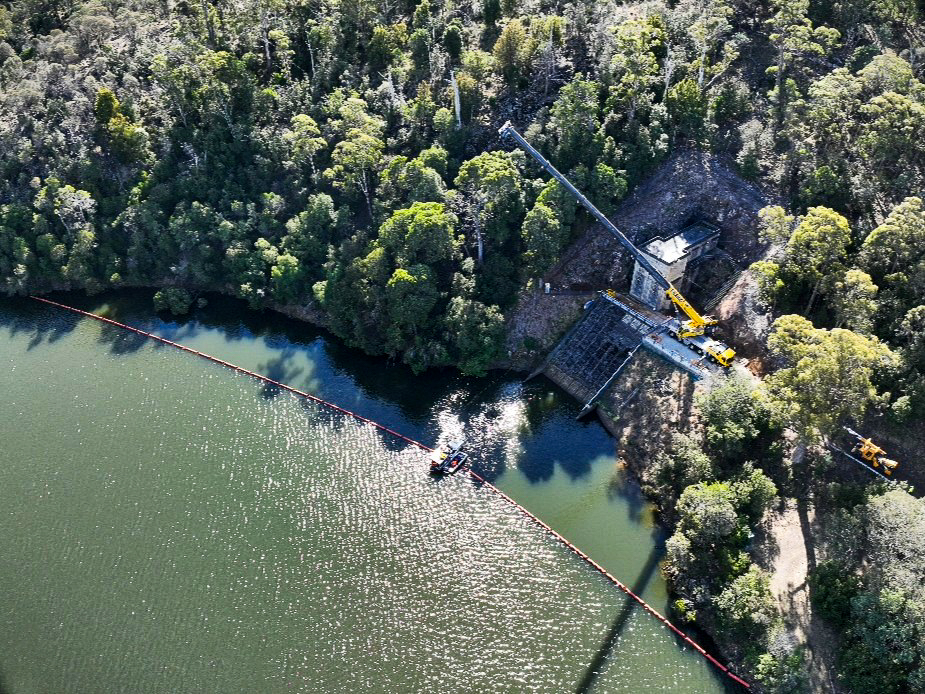
A specialist diving team from Tasmanian Divers Group have installed the new frame, with Billings Cranes carried out the lifting operations, lowering the frame down to the divers who carefully install it underwater.
“With Eli’s design, the frame could be installed while the old trash rack stayed in place,” says Andrew. “This meant the divers could work safely with one machine still running to clear sediment so that they could still see, and the station could go back to full service overnight, minimising lost generation.”
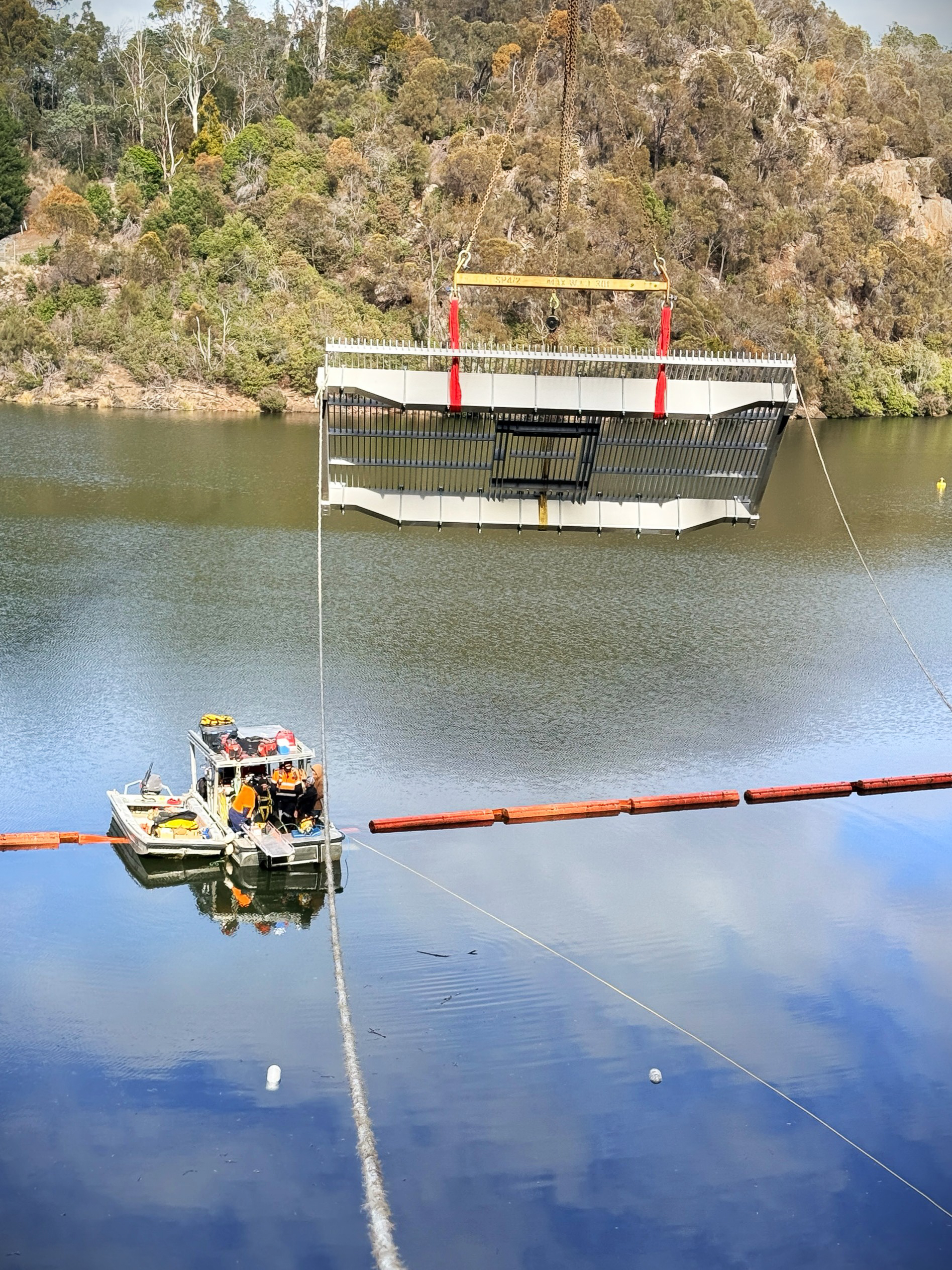
(the fancy new trash rack)
Designing around divers
Underwater work is difficult, slow and risky, so the design leaned heavily into reducing the amount of work required in the water.
“Everything is harder underwater,” Andrew said. “The divers can’t see much more than half a metre in front of their face, they don’t have drawings with them, and everything has to be talked through from the surface.”
“The divers have to play all the roles at once: they’re riggers, fitters, welders and surveyors,” Eli said. “And they’re doing it by feel as much as sight.”
To minimise underwater work, large sections of the frame were assembled in a workshop in Somerset by The Engineering Company.
“That alone reduced something like 150 underwater bolts down to about 30,” Eli said. “Every bolt is time saved, and less exposure for the divers.”
Less time underwater also meant a shorter full station outage, less lost revenue, and far greater flexibility if weather or inflows didn’t cooperate.
Coping with surprises
Not everything went exactly according to plan – but that’s how innovation evolves.
To extend the life of the new trash rack, the steel was coated in a new protective paint reinforced with glass fibre, designed to perform better underwater than traditional galvanising.
“It’s great paint but it’s very thick and gloopy,” Eli said. “Tiny variations in paint thickness across steel beams more than 14 metres long added up, leading to a 25 millimetre bow at the other end, making it a bit banana shaped,” Eli said.
An on‑the‑spot solution worked, with the divers loosening some bolts and using underwater winches to gently pull the structure into alignment.
“It was one of those classic examples where everything worked perfectly in the workshop,” Eli said. “Then reality turned up, but with some quick thinking, we found a fix.”
A winning outcome
The new trash rack is now fully installed, with the protective coating expected to extend its life from 20 to 40 years.
“It’s been a win for safety, a win for operations, and a win for stakeholders,” Andrew said. “We’ve kept the lake functioning, kept water available, and avoided a long, costly outage.”
It’s also been a win for local industry, with Tasmanian divers, fabricators and crane crews all playing a role.
Eli explains that the ‘big frame’ approach won’t be right for every site. It relies on a very specific combination of constraints: shared water use, cast-in beams, and limited outage windows. But the thinking behind it can be applied more broadly.
“It’s not a brand-new idea,” Eli said. “But taking something that was only a very rough concept and turning it into something real under multiple constraints – that’s the innovation.”