



This webpage aims to help Tasmanians better understand the role Hydro Tasmania may play in the Firmus Technologies’ (Firmus’) planned Tasmanian projects. We want to share more information about our role in these projects, however, we're unable to share the specifics about our conversations with Firmus or our assessment process as these are confidential for commercial reasons.
If you have further queries after you've taken a look at the information below, please send them to us using the form below and we will respond as soon as we can.

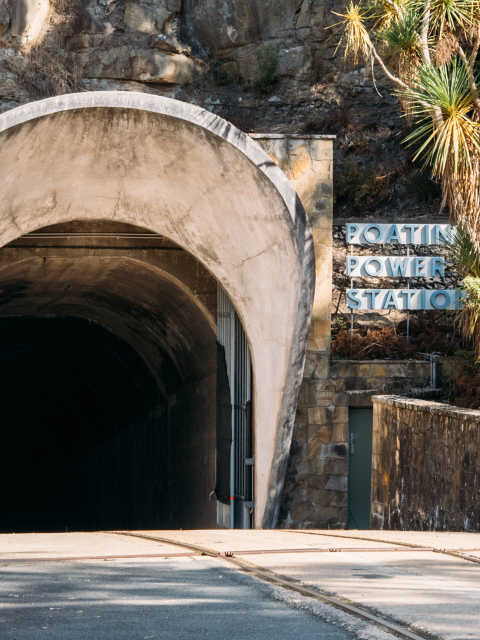
What is Hydro Tasmania's role in this proposal?
- We have a responsibility to assess new requests for large amounts of energy, regardless of the type of business or industry, including Firmus’ request.
- We do not approve or regulate AI factories. In Tasmania, AI factories are assessed under the Tasmanian Resource Management and Planning System (RMPS) which is designed to help make decisions about resource use in an equitable, sustainable way. This system involves every tier of government, various public authorities and regulatory bodies, and the community. You can learn more about this process here ➡️ https://www.stateplanning.tas.gov.au/getting-started/about-our-planning-system

Where would the energy Firmus needs come from?
Going forward this will not always be the case as these levels can vary year on year depending on delivery timing of new renewable supply and demand, usage patterns and how much it rains.
450 MW is a significant increase in demand. Meeting Firmus’ request would require more generation to be built in the state, including through new wind and solar developments which would be owned and managed by third-party private businesses. Hydro Tasmania would not be involved in funding, constructing or maintaining these new developments. Any new developments would be required to go through the external RMPS process.
The Federal Government expects new AI infrastructure developers like Firmus to help create new renewable energy generation. This might look like investing in new supply, generating new supply on-site or adjusting operations to match periods of peak supply e.g., when there is lots of sun and wind. You can read more about this advice here ➡️ Expectations of data centres and AI infrastructure developers.
The Tasmanian Government is also developing a similar statement that will outline the Government's expectations for the responsible development of AI infrastructure in Tasmania. A draft Statement will be released for public consultation, and we will update this page with information on the opportunity to consult, including a link, when it becomes publicly available.
Firmus has released an energy policy that support the Federal Government’s expectations that have already been shared publicly. It states that Firmus plans to support approximately two MW of new renewable generation for every one MW of demand it contracts for its sites. As part of our assessment, we will consider how this might happen in practice – two options are:
- Firmus could enter an agreement to contract energy directly from new wind and solar developers, leaving us to fill the gaps when there is little or no wind and sun. Our role in this is called firming.
- Firmus could enter an agreement to contract energy from Hydro Tasmania, and we could enter into direct agreements with the new wind and solar generators.
We’re also considering how new demand could be met while any new renewable projects are being built.
Who are the other large energy users in Tasmania?
They are Rio Tinto Bell Bay Aluminium, Boyer, Nyrstar and Liberty Bell Bay. These are often referred to as our ‘major industrial’ customers and when they are all operating at full capacity, they are responsible for more than half of the energy consumed in Tasmania each year.
Negotiating a direct agreement is generally only suitable for businesses with very large energy demands. Most businesses should approach a retailer for pricing. The State Revenue Office has a list available here ➡️ https://www.sro.tas.gov.au/electricity-concessions/tasmanian-electricity-retailers
What goes into a contract with a large energy user?
Typically, we work with a large business requesting a new arrangement like Firmus to understand how much energy they need and how they intend to use that energy e.g., in short bursts, through the night, 24 hrs a day.
This information helps us understand and develop options to respond to the request.
Large energy users often enter long term agreements. In some instances, the user can agree to certain requirements in return for lower prices. For example, a user might agree to reduce their electricity use to help manage periods when overall energy supply is low.
When assessing a new request, we consider how the new load might impact existing users and their demand. We wouldn't enter a new deal that impacts the energy available to other users, big or small.
What are the social and environmental impacts of Firmus’ proposals?
The broader economic, social and environmental impacts of Firmus’ proposed developments and any associated new renewable projects are important and will be considered through the Tasmanian Resource Management and Planning System (RMPS).
Ask us a question