


Taking special care at Lake St Clair (leeawuleena): replacing the radial gates at St Clair Lagoon
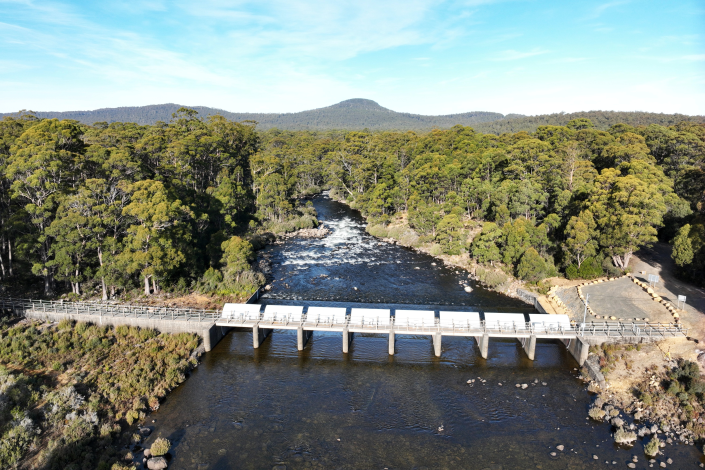
The radial gates are situated in a lagoon at the southern end of Lake St Clair, Australia’s deepest freshwater lake. When needed, they are hoisted open or closed to manage the flow of water into Lake King William and the River Derwent. Originally constructed as part of the iconic Tarraleah hydropower scheme, the gates have been part of our hydropower system since the early 1930s.
They’re not something we operate every day, week or month, but as Project Manager Bevan van Rooyen explained:
“The gates might only operate once or twice a year, but when we need them, they have to work exactly as intended.
"They’re important for regulating lake levels and controlling the release of water downstream. They’re also a valued part of Tasmania’s hydropower heritage.”
Refurbish or replace?
The replacement project was originally intended to be a refurbishment, but plans changed when detailed inspections were carried out, including specialist drone surveys and high-precision structural scanning by our consulting arm, Entura.
“Once we saw the condition of the gates, it became clear that refurbishment wasn’t the right answer,” Bevan said. “Some areas were heavily corroded. If we’d sandblasted them in the workshop, there would have been very little steel left.”
The original gates were coated in lead‑based paint, which would have added environmental risk and extra cost to refurbishment.
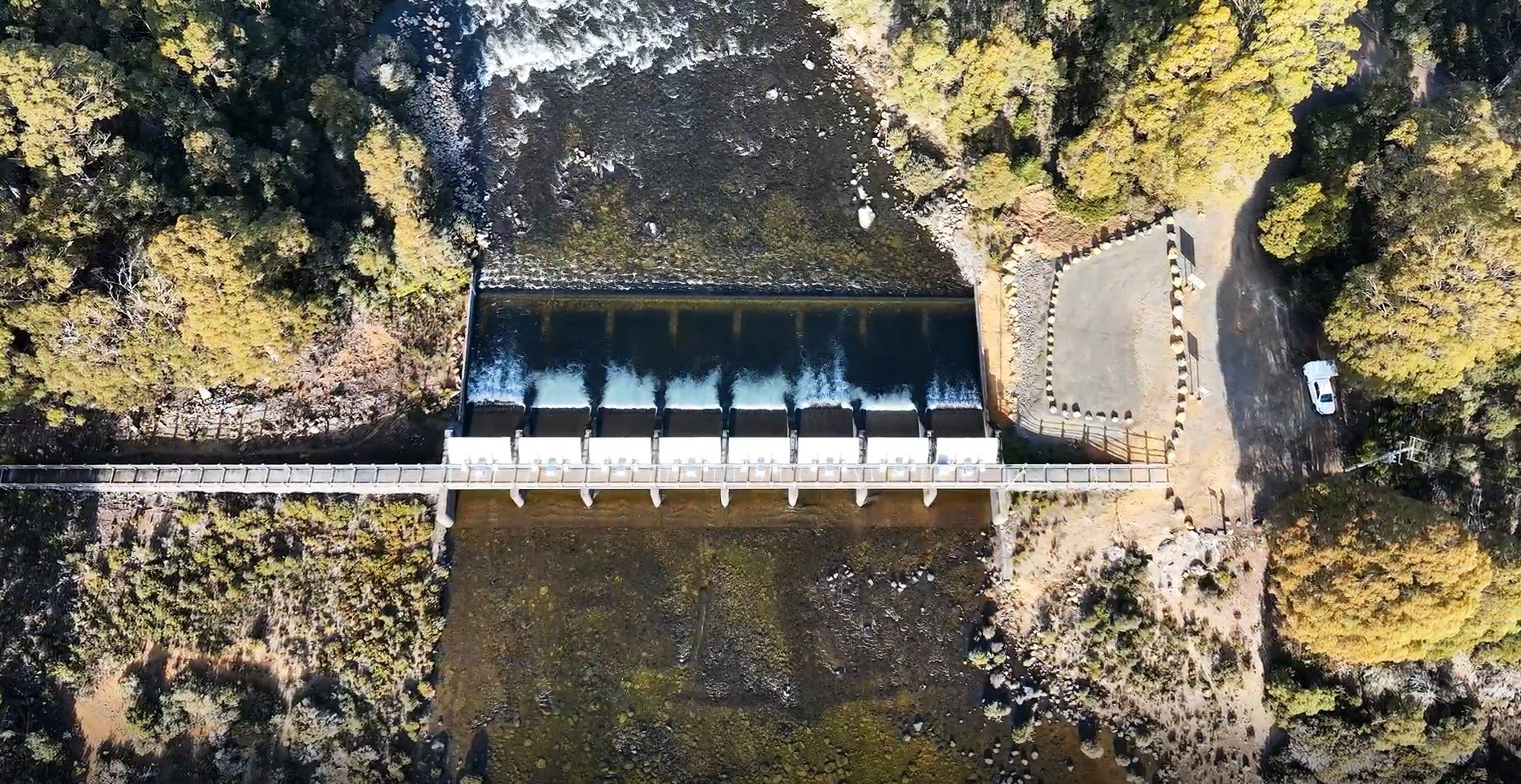
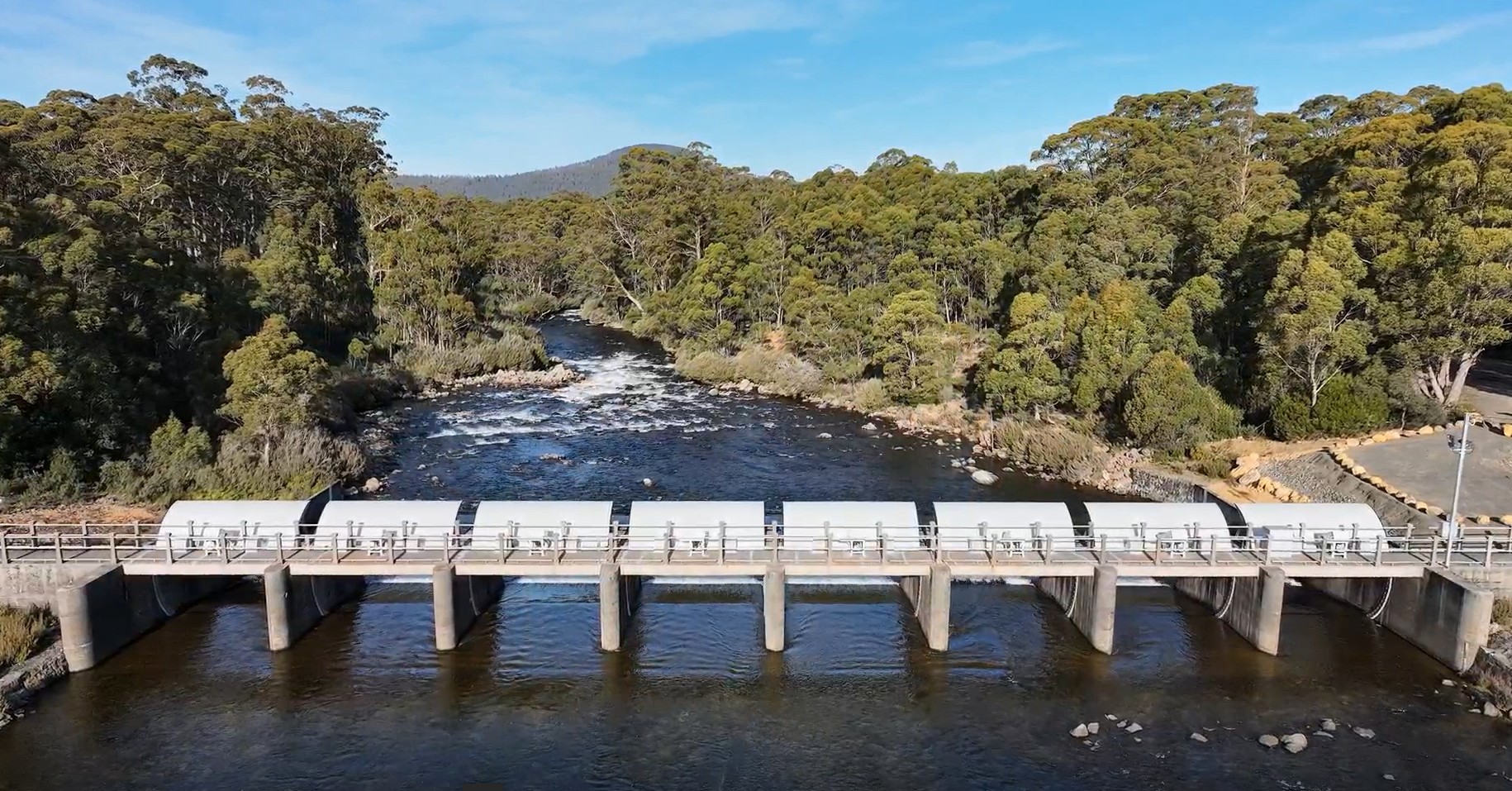
“It was definitely more cost‑effective to replace the gates than refurbish them,” Bevan said. “Now we have eight shiny new gates with stronger steel in key areas and much better seals.”
Replacing like with like – but stronger
The new gates have the same dimensions and operate in exactly the same way as the originals. However, the new versions are stronger, meeting modern standards and ready to serve for at least another 80 years.
The original gates were fabricated from multiple smaller pieces, most likely because larger pieces may have been difficult to lift in the 1930s. Modern offsite fabrication allowed much stronger, single‑section components in areas that experience greater stresses.
“Detailed computer modelling and analysis by our colleagues at Entura showed us exactly where strengthening was needed,” said Bevan. “So we increased the thickness of the steel in specific areas and improved the side seals. Structurally, these gates are much stronger.”
The hoist mechanisms have been overhauled too, and a lubrication system has been installed for the moving parts.
We’ve also installed new safety gates at each end of the dam walkway, refurbished the handrails and removed dormant light poles that were not part of the original structure.
Given the site’s cultural and heritage values, we conducted an Aboriginal heritage survey and heritage impact assessment before construction got underway. To celebrate and share the legacy of the gates with future generations, we are storing one gate and considering opportunities for repurposing it creatively and safely.
Treading lightly in a special place
Each gate weighs close to 3.5 tonnes, measures around five metres wide and three metres high, and had to be lifted into position with millimetre‑level precision.
Installing gates of this size (much like a double garage door) would be a feat anywhere. Doing it in the heart of the Tasmanian Wilderness World Heritage Area (TWWHA) required an extra-careful approach.
“The biggest challenge, hands down, was the TWWHA, making sure we did exactly what we said we were going to do, and not damaging the environment in any way,” said Bevan.
The solution was creating a temporary crane pad on Hydro‑vested land, allowing a long‑reach crane – nearly 70 metres at full extension – to install the gates without entering the waterway.
“The crane looked like a giant fishing rod when it was fully extended,” Bevan laughed. “But it meant we could stay out of the river, which reduced the environmental risk.”
The original plan was to remove the crane pad once the job was done, but after discussions with the Parks authority and our environmental teams, the decision was made to retain it, incorporating it sensitively into the landscape.
“Keeping the pad actually makes the area safer for our people doing inspections in future. Before, there were some very big boulders – nicknamed ‘sump busters’ for good reason – that people had to dodge.”
Working with water
Managing construction in a waterway demands careful planning. The construction work was deliberately scheduled for summer and autumn, when lake levels are usually lower. Even so, a staged water diversion and daily water monitoring were crucial.
Concrete barriers and sandbags diverted the water away from four gates so that contractors could work in dry conditions while water continued to flow through the remaining gates. Once the first four gates were completed, the diversion was reversed to enable the rest of the work.
To keep the works dry and the workers safe, the team closely monitored inflow, outflow and lake‑level data each day.
“The seasons can turn fast out there,” said Bevan.
“We had snow and heavy rain increase the inflows very quickly near the end of the works, raising the outflow levels by 50 cm in just a few days.”
Geofabric was laid under the work areas to capture algae, sediment and any potential spills.
“Once we were finished, we basically tied the fabric up like a big dumpling and lifted it out so nothing went downstream.”
Additional environmental protections included certified clean fill and multi‑season weed monitoring before and after construction.
Backing local capability
This project is another great example of Hydro Tasmania working with local Tasmanian contractors.
Crisp Bros & Haywards, one of Tasmania’s largest steel fabricators, didn’t just build the gates. They managed the entire construction scope, supported by a range of local subcontractors for painting, scaffolding, civil works and labour.
“Haywards has done a lot of fabrication work for us before, but this was the first time they’d managed a project like this for us from end to end,” Bevan said.
“They did an excellent job, and we got the quality result we wanted at a fair price. That’s a big win, because our money is Tasmania’s money so we’re careful how we spend it.”
Signed, sealed and delivered
All eight gates are now installed, greased, checked and commissioned.
Commissioning involved raising and lowering each gate multiple times to confirm everything behaves exactly as designed.
While the gates are certainly shiny, Bevan’s view of success isn’t flashy.
“I’m just proud that everything we planned actually worked. We’ve delivered a stronger asset for the future, protected an extraordinary place, supported local industry and achieved value for money – and if no one notices that anything has changed at Lake St Clair, then we’ve done our job properly.”
The result is an asset ready for generations to come, delivered with care and collaboration in one of Tasmania’s precious places.