

Resetting Poatina’s Turbine 2 for the next generation
Poatina Power Station is Hydro Tasmania's second largest, with a capacity of up to 360 MW. The station sits 150 metres underground, beneath Tasmania's Great Western Tiers.
More than 60 years after it was commissioned, Poatina is now undergoing its most significant renewal – a decade‑long program to modernise all six turbines.
“Technology has advanced a lot in 60 years,” says Hydro Tasmania CEO, Rachel Watson. “New materials and technology will deliver more efficient and adaptable machines for Poatina.
“The new turbine runners will use less water to produce the same amount of energy, helping us to keep more water in our storages. We’re expecting to get about 20 years of runtime from the new runners without having to do any heavy maintenance.”
Previously, the turbine runners would have to be taken out and reconditioned every six months.
The original turbines were designed for more static operating conditions, while the new machines are better suited to changing demands.
“The turbines are being built for the modern market,” says Rachel. “They’re fast and adaptable, which gives us much more flexibility in operating our fleet.”
The control system will also be upgraded and will provide real-time data on how the machine is functioning for future maintenance planning.
“The brain of the machine is completely different, with a new electronic system controlling the machine and feeding back information on its condition,” she said.
Much of the refurbishment activity is done at Hydro Tasmania’s Cambridge workshop near Hobart, using specialised machines and equipment. Hydro Tasmania crews also manage the removal and reinstallation of all major components on site, including lifts involving the station’s massive rotor, which weighs more than 130 tonnes.
Specialist engineering support from Hydro Tasmania’s consulting arm, Entura, has underpinned many aspects of the program – from early grid studies through to factory acceptance testing specialised technical support during refurbishment.
Taking it back to the doughnut
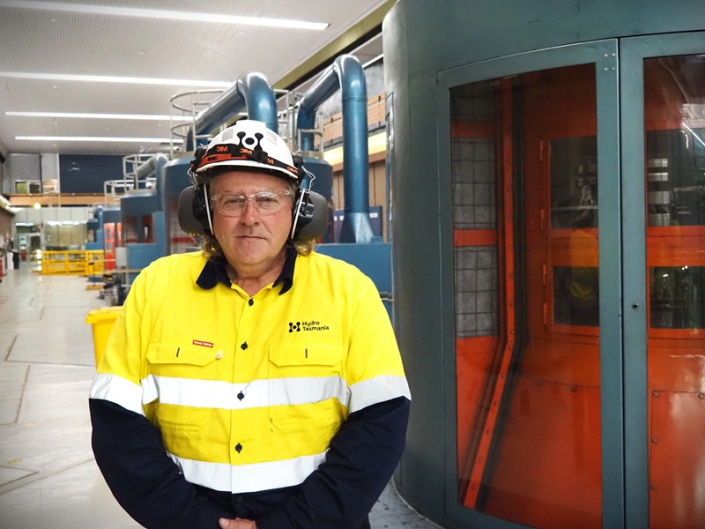
Thor Madsen is managing the upgrade on Turbine 2, having already completed Turbine 3. He has been with Hydro Tasmania for 35 years, starting as a graduate mechanical engineer before moving into large‑scale project delivery, and he clearly hasn’t lost any of the passion.
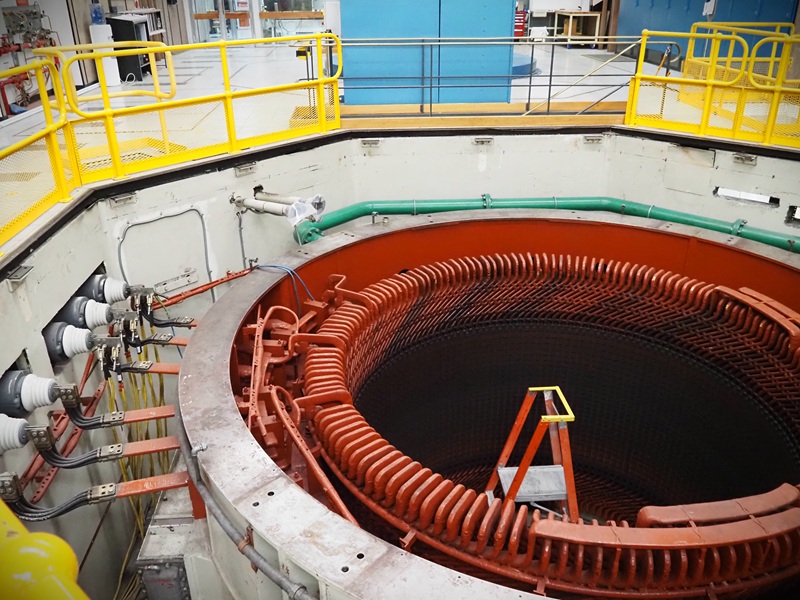
“In a job like this, you’re essentially taking the machine back to a doughnut,” he says. “You remove almost everything – mechanical, electrical, auxiliary systems – and then you rebuild it from the ground up.”
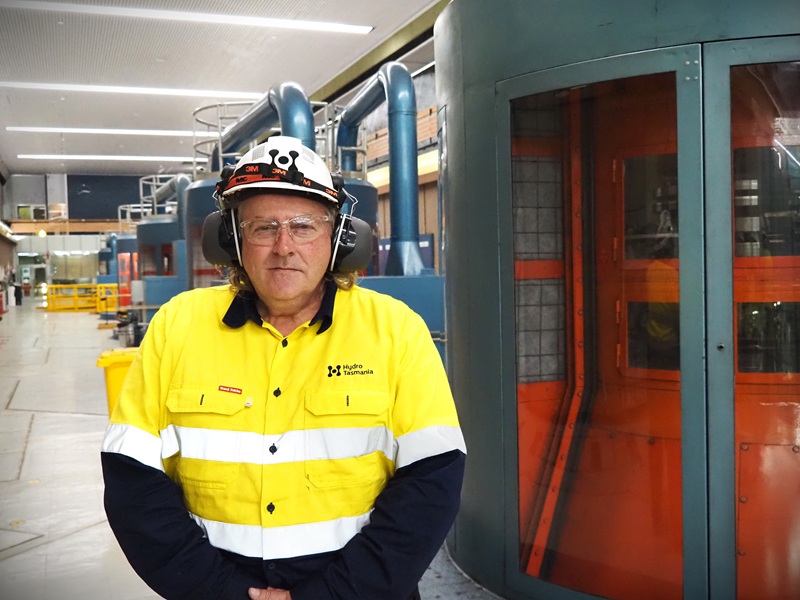
At Poatina, while one turbine is stripped back and rebuilt, the other five continue operating.
“That brings a lot of complexity,” Thor says. “We’re working inside a live power station, and all the business-as-usual is still going on. The connectivity with the local team needs to be regular and effective so we don’t tread on each other’s toes.”
A project of this scale takes years of planning. Once it’s underway, weekly coordination meetings and careful sequencing keep upgrade works, station operations and other projects aligned.
“There are lots of moving parts,” says Thor, “and there’s never a time where the planning’s done and you fold your arms and sit back. The environment is always moving so you’re checking and adjusting and moving things up, moving things down. It takes constant vigilance.”
Ongoing learning, turbine by turbine
Like most first‑of‑a-kind upgrades on long‑running assets, the work completed on Turbine 3 brought a few of what Thor calls ‘Trojan horse challenges’: the surprises that are only revealed once disassembly begins.
“What matters is how you respond to that,” Thor says. The team captured learnings in real time as work progressed, feeding improvements directly into the forward planning the Turbine 2 project.
“We didn’t want to finish one machine and then realise six months later what we should’ve done differently,” he says. “The knowledge capture had to flow through and be implemented immediately.”
Those refinements are already bearing fruit: improving safety, methodology, technical specifications, task sequencing, logistics planning and procurement approach.
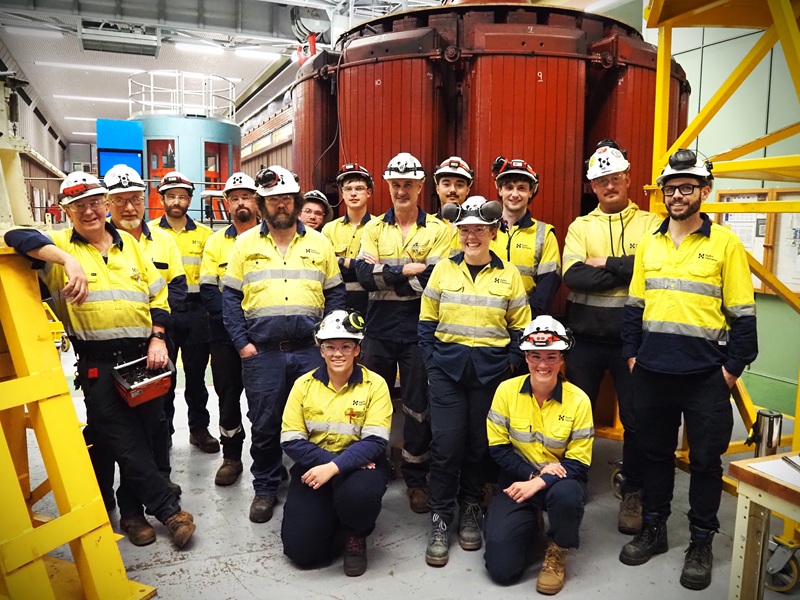
“I’m lucky to have an exceptionally high-calibre team out on site, and I know they can manage surprises and challenges,” says Thor. “My role is to plan ahead, smoothing out the bumps and filling in the potholes, so the team can do good work.”
Much more than a job
Thor has worked on many hydropower stations across Tasmania, and he knows the value of our assets and the role they play in keeping Tasmania powered and thriving. His sense of stewardship runs deep.
“I’m just a temporary custodian with the privilege of working on this gear on behalf of the Tasmanian people,” he says. “These stations were built and maintained by those who came before us, often in tough conditions, and we owe it to them and to future generations to look after them properly.”
“A big part of our role in completing this work is making sure we don’t leave a pebble in the shoe,” Thor says. “You want the next people to inherit something that’s been left in great shape.
“Our people’s care and passion for the assets is palpable. How could I not be motivated to work in step with that and ensure I’m doing my bit?”
Thor garners great satisfaction in seeing a machine returned to service.
“That’s when you breathe out,” he says. “When it’s back in operation, doing what it’s meant to do, and you know you’ve set it up properly to run reliably for the next 20 or 30 years.”
The upgrade of Poatina’s second turbine is expected to be completed in April 2027, given new life by skilful people who really care.