



Shared vision for a clean energy future
It’s been a busy time for clean energy in Australia! I spent an engaging and insightful two days at the Australian Clean Energy Summit in late July and there were major announcements for increases to both the Commonwealth’s Capacity Investment Scheme and firm capacity tenders in NSW. We also saw the week ended with a green light for stage 1 of Marinus Link. Then the much-anticipated draft report from the NEM Wholesale Market Settings Review landed and Minister Bowen convened an energy and adaptation roundtable.
These developments reinforce Australia’s commitment to transition to a future powered by clean energy and the key role that storage and firming must play to enable this. We're responding to the challenge by progressing investments to expand our flexible hydropower capacity and developing pumped hydro.
As always, there are a variety of views on how to best manage the energy transition and to harness the collective will to keep pushing to realise that future.
Here’s my insights from the conference, including a panel I joined to talk all things long duration storage, and my take on what we still need to focus on.
I participated in two interesting sessions:
- providing a wrap-up to close a session on ‘the business case for large scale storage’, and
- representing Hydro Tasmania on a panel looking at pumped hydro and deep storage.
Storage as the NEM’s shock absorber
The panel "Dunkelflautes and energy droughts: The role of pumped hydro and long duration energy supply" focussed on the role of long duration energy storage, including pumped hydro, to balance supply and demand particularly to ensure reliability during ‘energy droughts’ or dunkelflautes. These two terms are often used in the media when talking about the challenges in running a high renewables system and with good reason.
Dunkelflaute is a German word meaning a period of little to no wind and grey skies. A perfect storm (pardon the pun) for a system that is increasingly reliant on wind and solar, which provide cost-effective bulk energy but don’t always generate.
Coping without wind while it’s sunny? You’d mostly get by. Middle of the night but it’s windy? Again, the system could still deliver the energy needed. Both together? It could be referred to as a renewable energy drought…
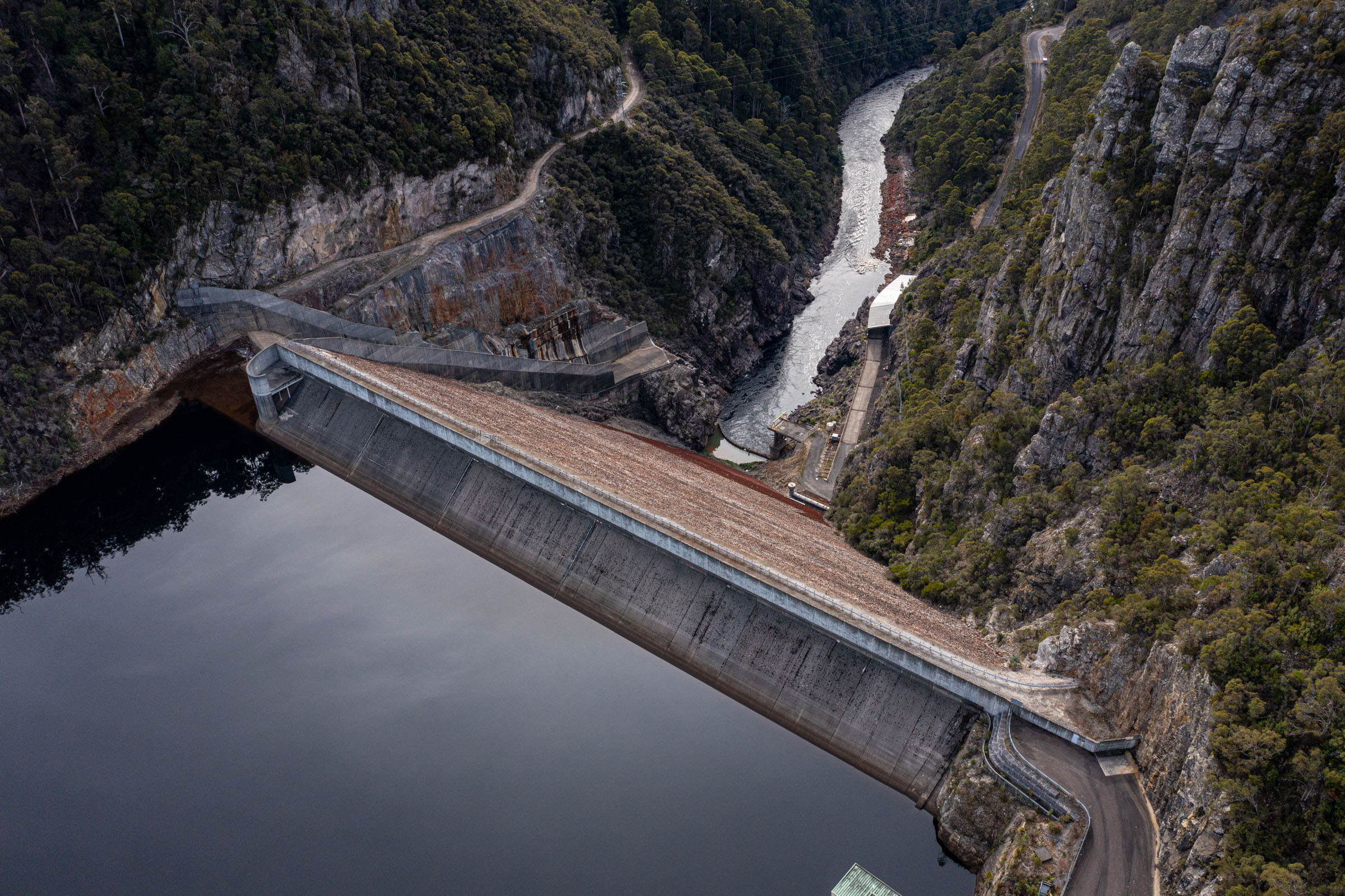
This is one of the reasons why hydropower (including pumped hydro) will be critical in the future. Hydropower allows you to store energy in large volumes in the form of water. It’s clean and its dispatchable, meaning it can then be sent to the grid almost instantaneously as needed 24 hours a day, every day.
And for pumped hydro the value isn’t just about being able to generate when needed, it’s also about being able to act as a load and soak up excess energy when needed, to avoid curtailment of energy from wind and solar, and to keep the system secure. As renewable share rises, including in our homes, being able to manage very low demand is just as critical as managing high demand and pumped hydro can do both.
I like to think of storage as a shock absorber – expanding when the road dips down to fill the gaps and contracting (and pumping) when the road bumps up – ensuring we’re all in for a smooth ride! When the bumps and dips are long and unpredictable having long duration storage is even more valuable, making pumped hydro a super shock absorber.
Sufficient storage of all durations also makes the market more efficient. Without it, you’d need to overbuild bulk renewables and rely more heavily on gas than we’d like to. Hydro power also has the benefit of a very long asset life, supporting a smooth ride for decades to come as we build and re-build bulk energy assets with much shorter lives.
Pumped hydro vs batteries and gas - AND not OR
Over the conference, there was also a lot of talk about batteries and gas. We will need all the cost competitive technologies working together and playing their role. But we also need a diversity of assets each playing to their strengths. Batteries can cover short-duration storage cost effectively, making them ideal for intra-day storage – such as from day to evening. They also can’t provide all of the services to support system security that pumped hydro can, such as inertia.
And the role of gas is different again. It can provide critical back up especially while we build out renewables and storage to replace retiring coal assets but to reduce emissions and ultimately reach net zero its role should be minimised. And while gas generation can fill an energy deficit to maintain reliability, it can’t store excess energy making it a poor substitute for storage. Compare this with building out the fleet of clean energy technologies that will underpin our emissions ambitions and serve us for decades to come.
I acknowledge that the energy transition won’t be easy, we’ll need to lean on all options to navigate the pathway. And there will need to be huge investment in building this new system. But I firmly believe that renewables and firming, leveraging the valuable role that hydropower can play, will be the key to a least cost clean energy future.

Getting engagement right
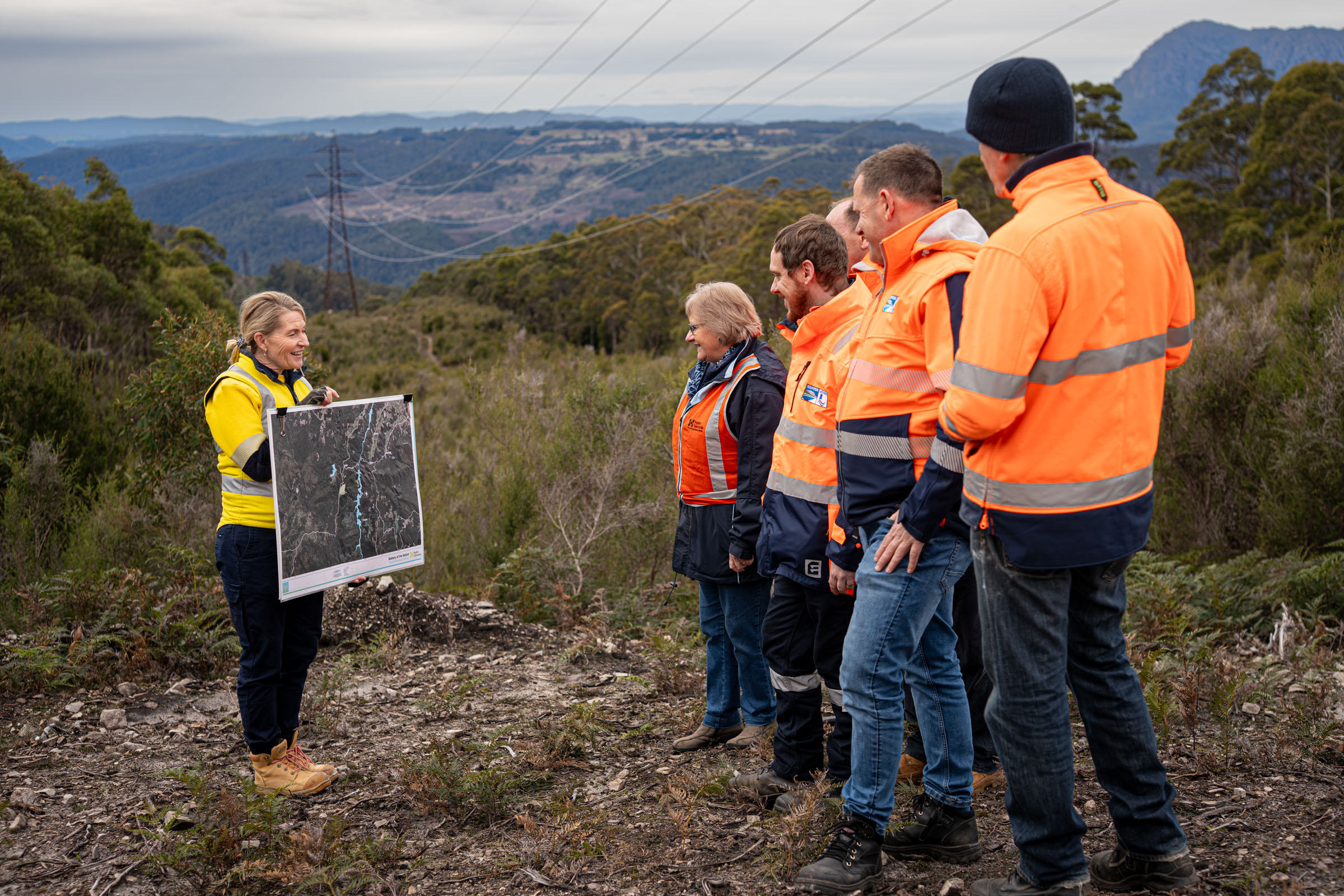
Lifting up from technology choices for a moment, it was great to see a focus on community. As our CEO Rachel Watson noted in her panel discussion, the industry needs to work harder with communities where renewable energy projects and related infrastructure are located.
We can’t just assume that everyone is on board. We must carefully balance the need to progress projects with the genuine concerns of communities as they relate to the environment, amenity, visual impact and more. The industry must be responsive and work to address concerns where we can.
Importance of the right policy settings
To bring about the desired energy mix, we need the right policy and market settings. Milestones like the Nelson panel's draft report and its recommendations are welcomed but it highlights that more is needed to provide the right investment signals and certainty for long duration storage with long lead times, like pumped hydro, if we are to unlock their critical value to the transition.
The Government’s focus on derisking investment is positive but needs to expand to better meet the needs of pumped hydro. A focus is also needed on appropriately recognising the services and reliability these assets provide. In the panel on large scale storage, there was much discussion of the importance of ‘revenue stacking’ to battery projects – combining revenue from different value streams – in order to make them viable.
This is even more pronounced for long duration storage as the market doesn’t currently value the insurance that it can provide. The review of the NEM market settings is seeking to narrow this gap, but there remains a role for governments in supporting critical assets that can underpin future reliability.
This Guidance Note, launched alongside the conference by the International Hydropower Association (IHA) explores potential policy actions.
Like many others, Hydro Tasmania has real projects in the pipeline that we are progressing to meet the market timing needs (after 2030 when deep storge is most needed). So, the challenge is how to incentivise investors and avoid pausing projects while continuing to develop the right policy settings.
We don’t yet have all the answers, but I came away from ACES 2025 with a renewed sense of urgency and commitment to keep forging ahead.