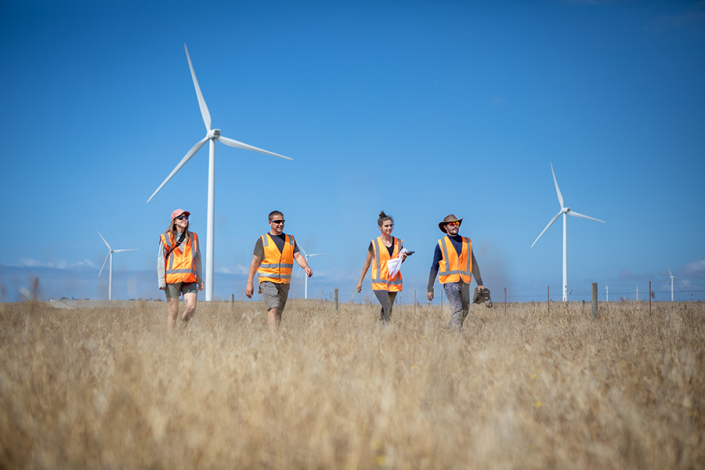



Saving the wombats of Musselroe Bay
The iconic wombat is a familiar sight to most Tasmanians. Impossibly cute and timid, yet blessed with the strength of a tractor and the temperament of a short-order cook.
This world-famous marsupial is a major drawcard for our tourism industry and synonymous with Australia itself. Yet European settlement introduced a disease that has caused terrible suffering to this important animal: sarcoptic mange.
The disease is caused by an indiscriminate parasitic mite found infesting animal species throughout the world, including humans, but Australia’s wombats have proven particularly vulnerable to its effects. The condition presents as thick, crusty skin and hair loss. In severe cases, it causes a slow, painful death from secondary infections.
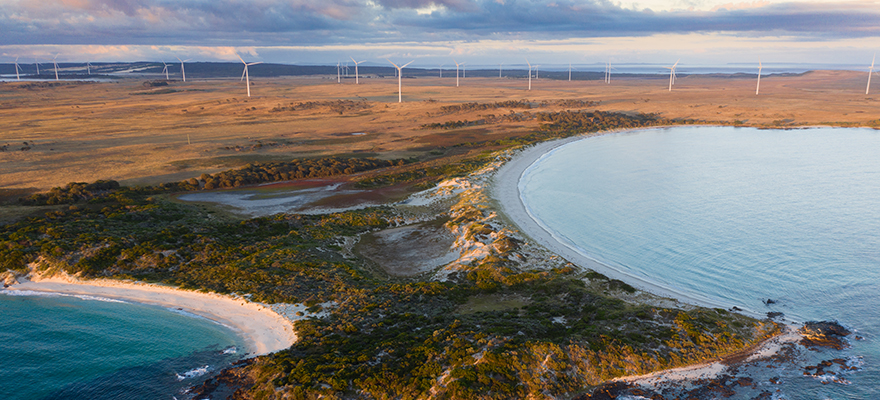
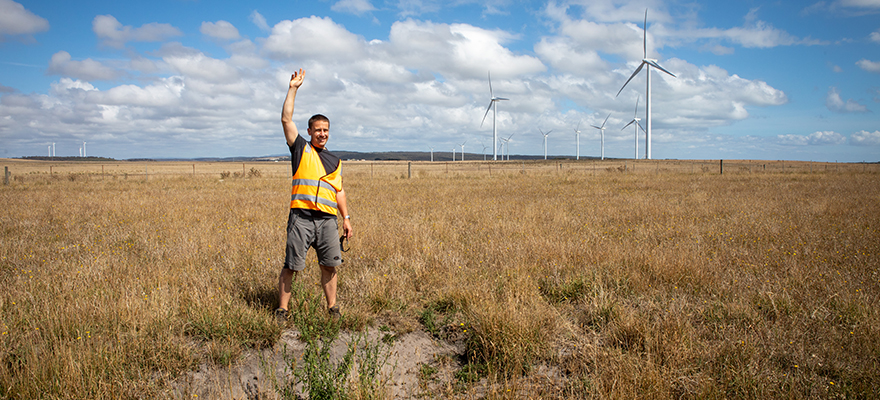
Musselroe Bay is on the remote north-eastern corner of Tasmania. Aside from wombats, it gets relatively few visitors, despite the area’s beautiful white beaches, the stunning Mount William National Park and the famously difficult Barnbougle Lost Farm golf course nearby. This might have something to do with the incessant westerly wind, making it the perfect location for Tasmania’s largest wind farm.
Musselroe Wind Farm, part of Woolnorth Renewables, produces around 5 per cent of Tasmania's annual energy needs. It was built and co-owned by Hydro Tasmania and its 56 80-metre-tall turbines make for a spectacular sight, especially at sunset.
Bring your eyes back to earth at twilight and you may spot familiar shapes of grazing wombats.
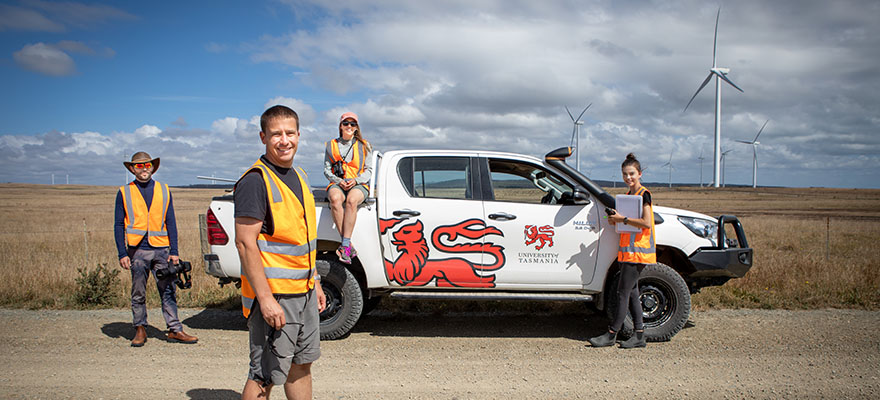
Hydro Tasmania has partnered with the University of Tasmania for an Australian Research Council Linkage project on wombat health to determine the effectiveness of a drug called Fluralana in combating sarcoptic mange at a population level. This is a common treatment for mange used by veterinarians on dogs and cats throughout the world, which had never been trialled on wombats, until now.
There are several phases to the research: to first trial Fluralaner in captive wombats to determine any initial effectiveness, then to test the drug in a wild population and gather data to build a mathematical model that will guide a disease management strategy, and finally to translate that model into a disease control program.
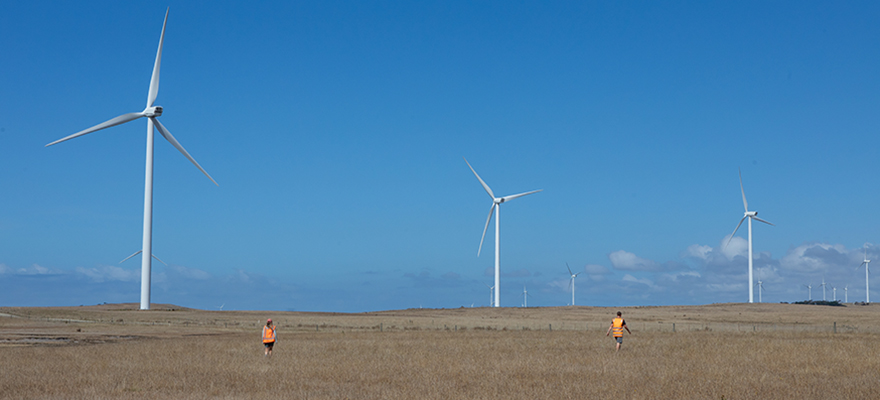
But during the last weeks of warm weather in early 2021, Musselroe Bay looked less like a research laboratory and more like a Monty Python sketch, as UTAS researchers spent their evenings trying to catch wombats – which proved quite difficult on several fronts.
First, one must find a wombat and unfortunately, from a distance or a moving vehicle in fading light, it is remarkable just how many rocks resemble wombats.
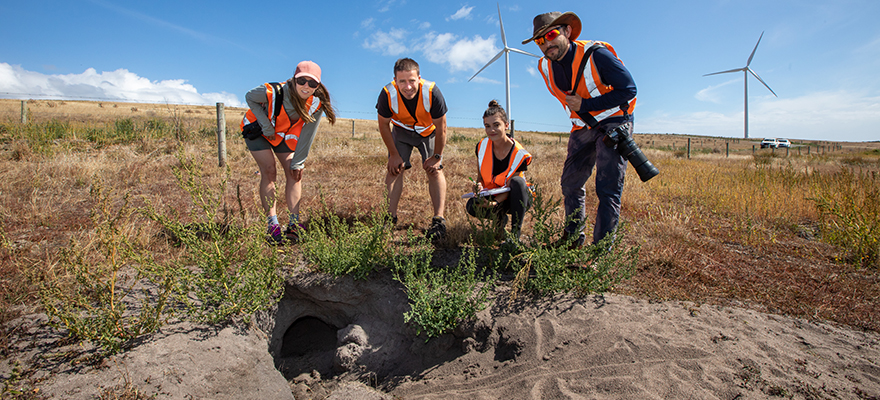
Secondly, having found a wombat, one must get close enough to catch it. Unlike the wombats of Tasmania’s Maria Island, who are almost famously oblivious to the presence of humans, the wombats at Musselroe Bay are far more skittish. After a prolonged, slow process of stalking and surrounding a wombat, they will often suddenly dart straight into a nearby burrow, hidden in the long grass.
Thirdly, a wombat can run faster than most humans, is not easily subdued and will bite if cornered. The researchers use large nets to snare each animal before quickly anaesthetising them to carry out their research with the minimum possible distress.
If this sounds somewhat amusing, it belies the serious nature of the research being undertaken and the optimism for a successful outcome. Strategically deployed, Fluralaner has the potential to relieve the suffering of wombats throughout Australia.
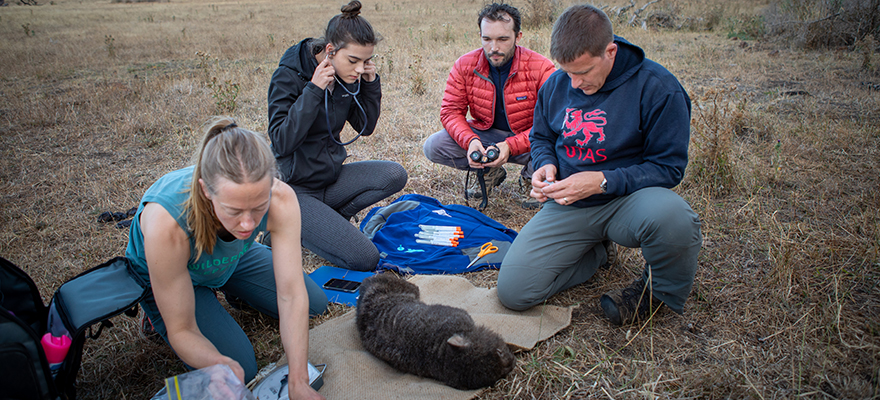
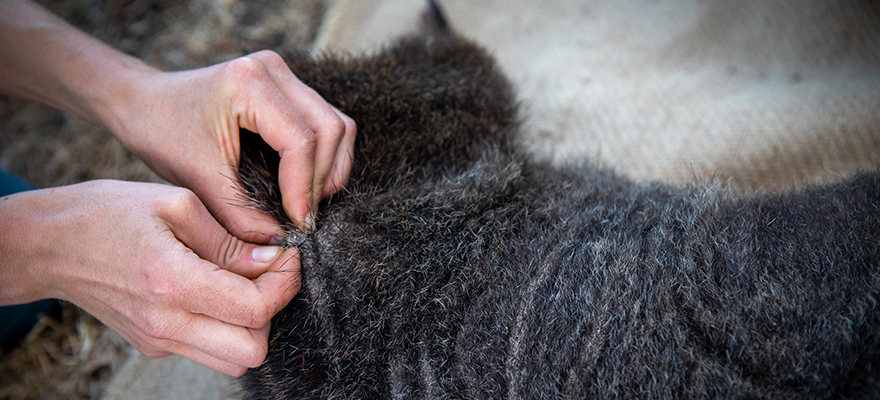
Hydro Tasmania’s contribution to this research includes field surveys to determine the prevalence of mange in areas of Hydro Tasmania-managed land, which is being done by staff at Entura, our engineering consultancy. This data is pooled with multiple field studies from other sites and contributes to the greater understanding of wombat population dynamics and the spread of sarcoptic mange across the state.
Hydro Tasmania is providing generous contributions over the three-year project as one of several partners in this research with UTAS, aiming for publication at the end of 2022.
Hopefully, together, we can put an end to sarcoptic mange and help our wombats ditch the itch.