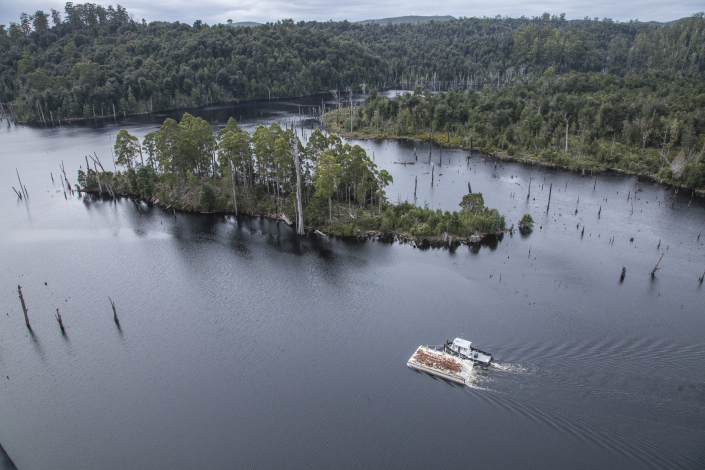



A drowned treasure
Prized forests of Huon Pine, myrtle and sassafras, once thought lost are being recovered and woodworkers are clamouring to get their hands on them.
When the Reece Dam was built on the Pieman River in 1986 deep valleys of forests disappeared beneath the water.
Thirty years later those forests are still standing, albeit beneath a 20-30 metres of water.
‘It cuts like butter’
Curious about whether or not the timber would still be useable after three decade below the water SFM Environmental Solutions did some initial tests and the results were surprising.
Not only was the waterlogged timber still useable, it had taken on some unique characteristics.
Some of the sassafras logs had taken on a green colour while other timber varieties have proven easier to work with.
SFM Director David Wise said woodworkers were excited about the unique product.
“They’ve described it as like cutting butter, and are really excited about the provenance of the timber and how it can add to the uniqueness of their projects,” he said.
“There is a huge amount of excitement around the future uses of Hydrowood.”
How do we get it out of the lake?
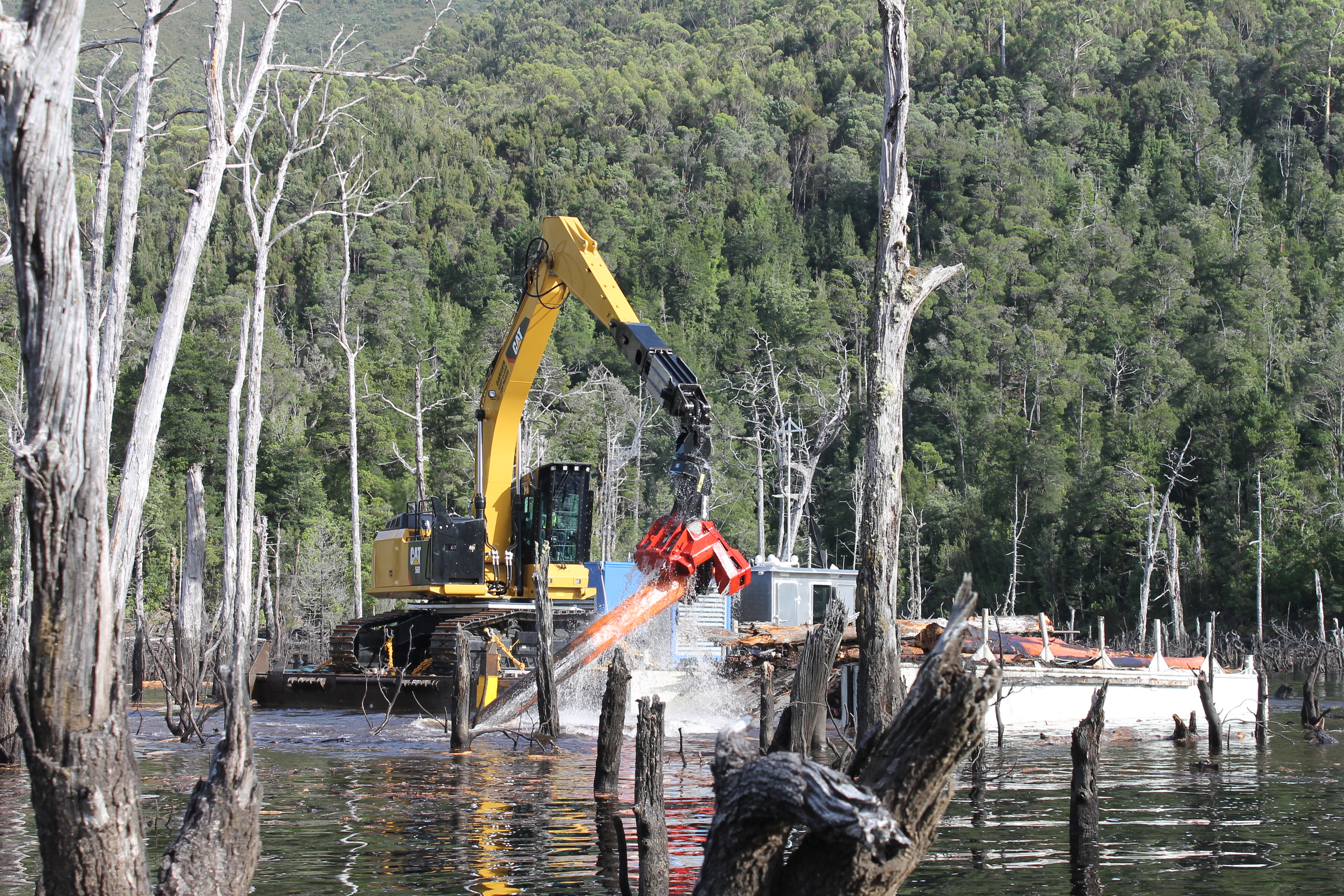 An Australian-first project is bringing the sunken treasures to the surface.
In 2012, SFM Environmental Solutions began working with Hydro Tasmania to harvest the underwater forests.
Supported by a $5 million federal grant, specialised equipment was designed and built for SFM by cutting edge Tasmanian manufacturing companies.
The equipment then had to be fixed to boats and barges so it could reach the submerged forests.
Cutting down trees underwater is similar to how it’s done on land, except it’s upside down.
Starting at the top of the tree, rather than at the bottom, a huge mechanical arm reaches down as deep as 26 metres below the surface and grips the base of the tree.
Then a specialised chainsaw cuts through the log and it’s brought to the surface. No divers are needed in the water.
A unique new Tasmanian resource is created
Today Hydrowood is used for high end furniture, boats and bespoke building features.
Below the surface of the water the timber is preserved due to the low temperature and low oxygen levels.
It’s also protected from sunlight by the tannin stained water which gives it a unique quality.
Each piece of timber that comes from the lake has a distinct colour and markings making it ideal for furniture designers looking for a unique edge for their bespoke products.
The story behind the timber also makes it an attractive product; it’s a resource from Tasmania’s wild West Coast that would otherwise have been lost forever.
SFM have created a separate business, Hydrowood, which specialises in supplying the salvaged timber.
Director Andrew Morgan said it was a great result.
“This project is a great example of Government and Hydro Tasmania working with the private sector to facilitate new industries for the State, off the back of innovative technology and Tasmanian advanced manufacturing expertise,” he said.
Worldwide there are an estimated 300 million trees submerged in dams built as far back as the 1950s for hydroelectric schemes and water storage.
In Tasmania there are still huge untapped forest resources submerged in our many hydro dams.