Our history
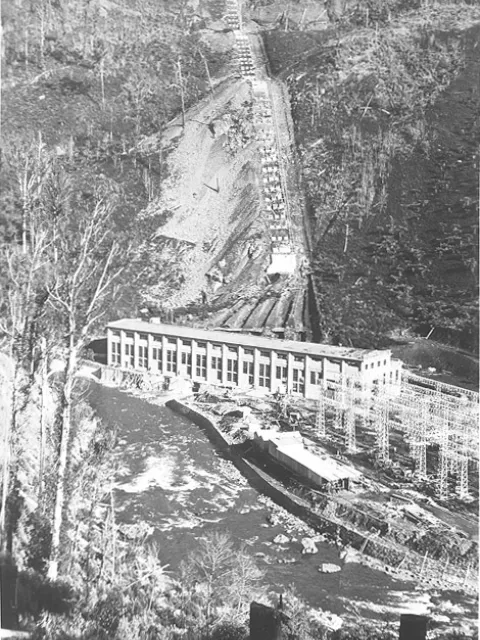
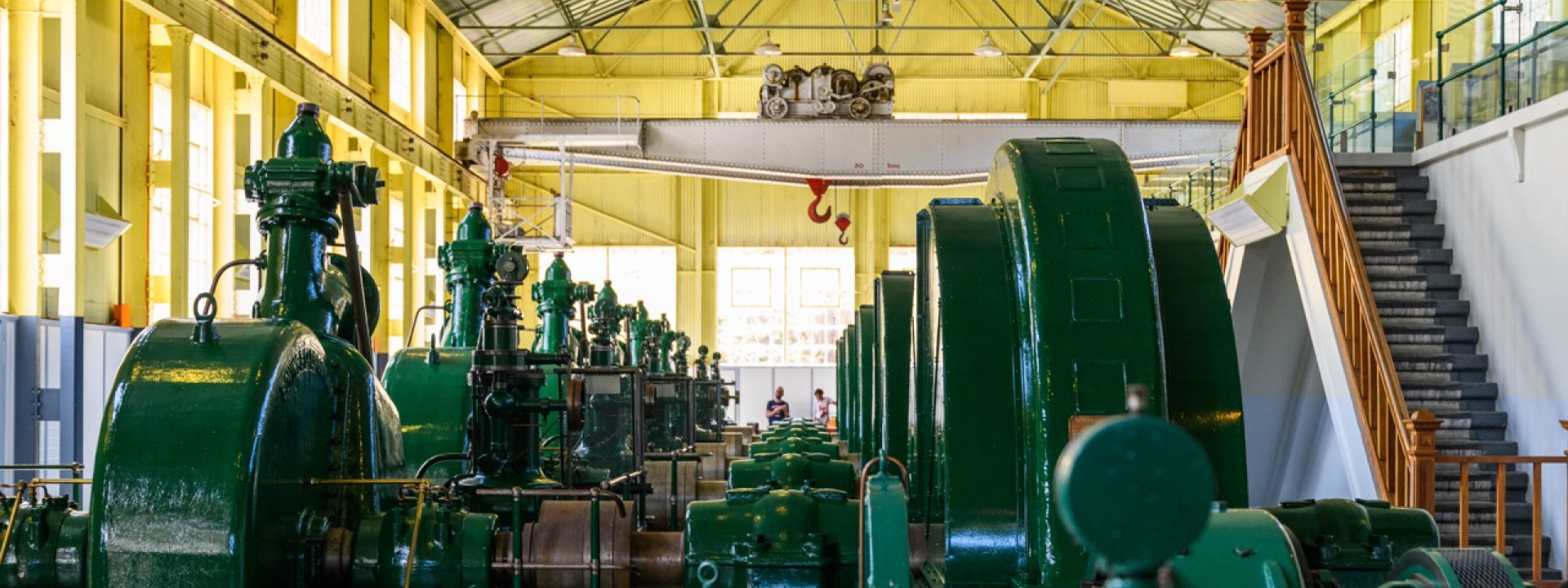
Our first hydroelectric power station, Waddamana, opened in 1916. Now we’re the largest generator of renewable energy in Australia.
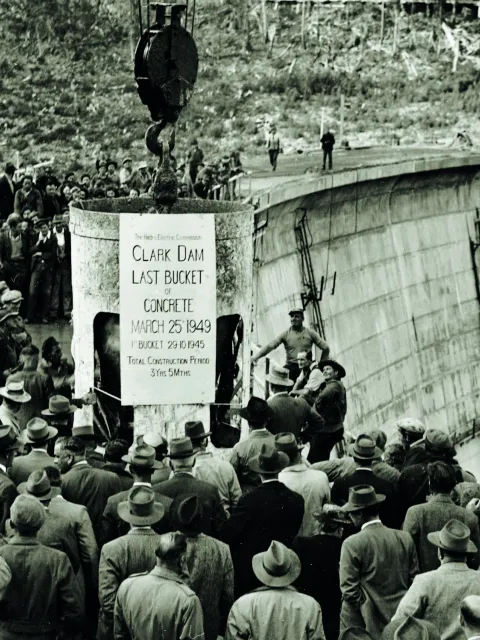
It was a bold engineering feat, under tough conditions, in a remote part of the world.
Thousands of people – locals and those displaced by wars or seeking better lives – built Tasmania’s hydropower schemes. Many of these families still call Tasmania home and have new generations who work with us, like their parents and grandparents did.
Over the years, we have employed more than 30,000 people and shaped Tasmania. We’ve powered industries and communities, and built roads and towns where there were none before.
We will always be here to power Tasmania.
From 100 years ago, for 100 years to come
In the beginning
Tasmania’s streets were first lit up by private generators. After the First World War, the Tasmanian Government birthed its Hydro-Electric Department to bring power to farms, factories and homes.The pioneers
Hydro schemes were risky and camps harsh until hydro villages improved life for workers. Post-WWII migrants helped build new hydro developments across Tasmania - and home electricity became the norm.Green power
Rising demand drove new projects and environmental debates. A new dam was halted in 1983, and Tasmania’s dam-building heyday drew to a close. Our final power station was commissioned in 1994.The road to today ...
When new hydropower builds ended, we focused on maintenance, sustainability and consulting. With the Basslink interconnector, we joined the National Electricity Market.... and beyond
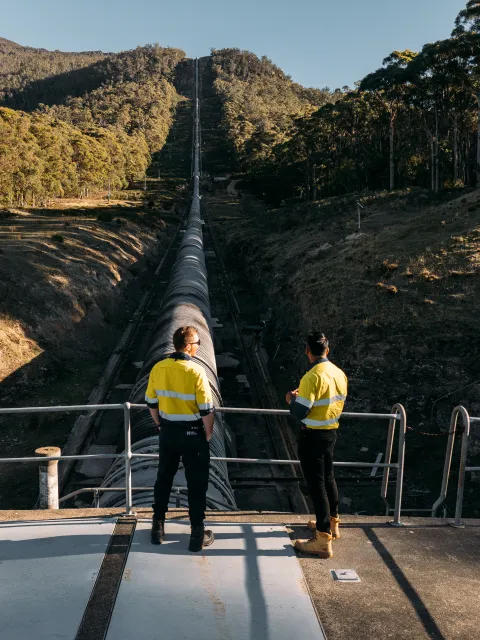
We are now Australia’s largest renewable energy generator. Our journey continues with new projects planned to power Tasmania for generations to come.In the beginning
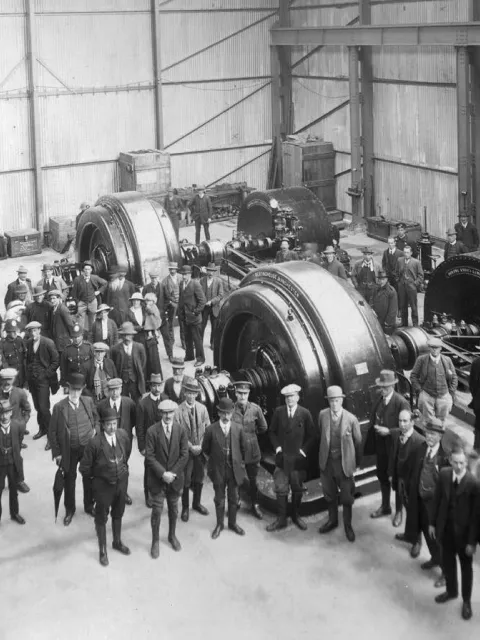
The streets of Tasmania slowly began to be lit by electricity, through privately owned generators like the Duck Reach Power Station. When a small electricity company facing financial trouble was purchased by the Tasmanian Government, the Hydro-Electric Department was born.
Our new power stations revolutionised farms, mills, mines and factories through the 1920s. Household demand grew rapidly through the ’30s, but war time made equipment, materials, expertise and labour hard to get.
The pioneers
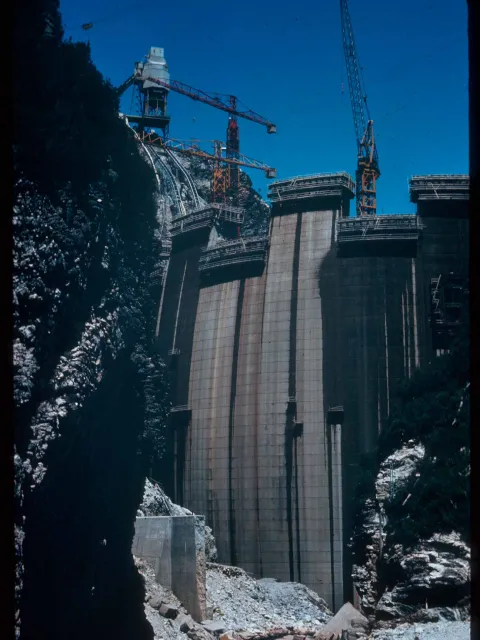
Construction of our schemes was dangerous and the camps were isolated and cold. Living conditions improved with newly constructed hydro villages – and safety precautions became a priority.
After World War II, international immigration intensified. People from the UK, Poland, Germany, Italy, Scandinavia, and Eastern Europe joined us, creating lively and diverse communities. Some became multi-generational hydro families, still working with us today.
With more hydropower, household electricity became the norm.
Green power
Continuing electricity demand spurred new developments and focus grew on environmental impacts. When a new development on the Gordon River was proposed, communities were divided. The future of the Franklin River was argued on the national stage, and the dam was prevented by the High Court in 1983.
The age of dam construction in Tasmania came to an end. At the peak, over 5,200 people were employed by Hydro Tasmania. In 1994, our last power station was named Tribute, honouring the service and sacrifices of thousands of workers.
The road to today ...
Once new hydropower construction ended, we focused on maintaining our stations, protecting our dams and waterways, and increasing sustainability. Some of our technical expertise turned to consulting internationally, leading to Entura.
In mid-1998, the Hydro-Electric Commission was disaggregated into three government-owned enterprises – Hydro Tasmania (energy generation), Transend, now TasNetworks (transmission and distribution), and Aurora Energy (retail).
To meet growing electricity demands, we explored wind power, investing in wind farms at Woolnorth in north-west Tasmania and at Musselroe in north-east Tasmania. We also developed world-leading hybrid off-grid renewable energy systems for King Island and Flinders Island in Bass Strait.
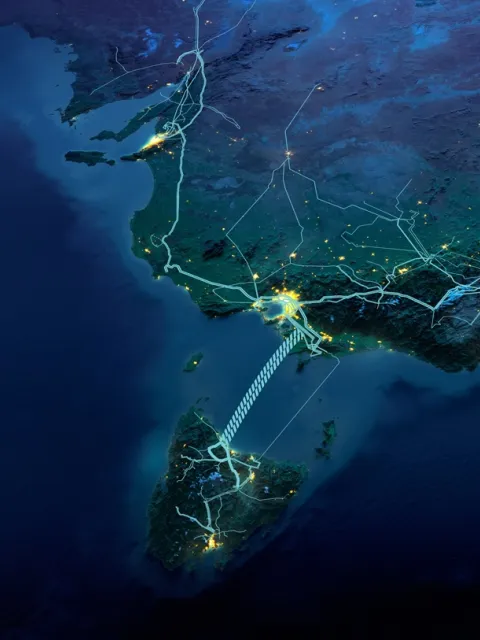
With the Basslink interconnector cable connecting Tasmania to Victoria, we entered the National Electricity Market in 2005, exporting and importing energy to support Tasmania’s economy. Our Victorian retail arm, Momentum Energy, was born.
... and beyond
Now we are Australia’s largest generator of renewable energy – but demand for clean, reliable and affordable electricity keeps growing. We are progressing new initiatives to meet Tasmania’s future electricity needs and unlock new renewable projects with Marinus Link, which will deliver additional interconnection between Tasmania and the mainland.
We will continue to power Tasmania and Tasmanians for generations.